Leave Your Message

Top Aircon Filter Drier Manufacturers for Global Buyers

Choosing an Aircon Filter Drier manufacturer is a technical decision, not just a search for the lowest unit price. This small component helps capture moisture and particles in an air-conditioning circuit. Poor fit or unsuitable materials can complicate installation and affect system performance. Details matter.

For global buyers, a useful comparison starts with the product itself. Check refrigerant compatibility, operating pressure, connection size, desiccant type, and documented quality controls. A clear datasheet should identify these specifications. Ask whether the manufacturer can provide traceability records, test information, samples, and consistent packaging. A catalog photo cannot confirm how a drier performs under real operating conditions.

Supplier capability matters too. Review production capacity, lead times, export experience, technical support, and warranty terms. Confirm that certificates and test reports match the specific product, rather than relying on broad claims. These checks help purchasing teams compare manufacturers on evidence, not polished sales language. Small differences in port dimensions or packaging can matter when parts reach a busy service workshop.

No ranking can replace checking a sample against your system requirements. Even a thorough checklist has limits. Product lines change, and public information may be incomplete. The manufacturers in this guide are presented as options for further evaluation, not as a guarantee of suitability. Buyers should verify specifications directly and consider their own installation conditions before placing an order.
Top Aircon Filter Drier Manufacturers for Global Buyers

Aircon Filter Driers: Types, Functions, and Refrigerant-System Applications

An air-conditioning filter drier removes moisture, acids, and fine debris from refrigerant as it circulates. Its desiccant captures water that could freeze at a metering device or contribute to corrosion. A fine screen also helps trap particles before they reach sensitive valves.

Small parts matter. A restricted drier, however, can cause pressure drop and reduce cooling performance.

Common designs include solid-core and replaceable-core models. Solid-core units are compact and typically used in smaller systems. Replaceable-core housings let technicians change the core after contamination or system service. Bi-flow driers support refrigerant movement in both directions, making them useful in many heat pumps.

Suction-line driers serve a different purpose: they can help capture debris after compressor failure. They are not a substitute for finding the cause.

Choose a drier for the refrigerant, system capacity, connection size, and operating pressure. Check the manufacturer’s application data, not just the pipe diameter.

In the field, a temperature difference across the drier may suggest restriction, but readings need context. Ambient conditions and load can mislead. Selection is not always tidy; service history and measured pressures matter too.

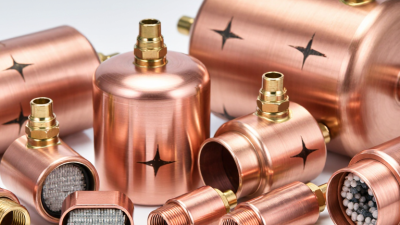
How Filter Driers Capture Moisture, Acids, and Particles

A filter drier protects a refrigeration circuit by removing contaminants before they reach the expansion device or compressor. Its desiccant bed, commonly molecular sieve or activated alumina, adsorbs water as refrigerant and oil pass through. The pores are microscopic, but the consequences are visible: moisture can freeze at a narrow valve opening and interrupt flow. AHRI Standard 700-2022 specifies a maximum water content of 10 ppm by weight for several common refrigerants. That is a stringent purity benchmark, not a promise that every installed drier will achieve it. Installation quality matters.

Acids and particles need different defenses. Activated alumina can help capture acids formed when moisture, heat, and oil degradation interact; a fine screen or filter element traps metal fragments and other solids. AHRI 700 also sets refrigerant acidity limits, including a 1 ppm maximum as hydrochloric acid for many refrigerants. Check the applicable refrigerant and standard table before using that figure. Small details matter. In field work, a darkened drier or pressure drop may signal contamination, but neither proves the cause alone. Measuring system conditions and replacing a saturated drier after opening the circuit are sensible steps. One limitation deserves attention: a filter drier cannot repair burnt oil or remove every contaminant already circulating.

Top Aircon Filter Drier Manufacturers for Global Buyers - How Filter Driers Capture Moisture, Acids, and Particles

Filter drier feature Common construction or media Moisture control Acid control Particle control Buyer check
Molecular sieve core Synthetic zeolite desiccant, often formed into a solid core or contained in a sealed shell. Adsorbs water from refrigerant; widely used where low residual moisture is important. Not primarily an acid-neutralizing medium. A separate screen or filter element retains debris and core particles. Confirm refrigerant and lubricant compatibility, rated capacity, and pressure-drop data.
Activated alumina media Porous activated alumina, used alone in some designs or blended with other desiccants. Can adsorb moisture; performance depends on the formulation and operating conditions. Can help adsorb certain acids in suitable formulations; capacity is not unlimited. Particle capture is generally provided by the drier’s filter screens or core structure. Check the manufacturer’s stated refrigerant, lubricant, and acid-removal suitability.
Blended desiccant core A formulated combination of desiccants, commonly selected to balance moisture adsorption and acid control. Captures moisture through adsorption; capacity varies with media mix and core size. May provide acid adsorption when the blend includes suitable media. Screens or a filtering layer help prevent contaminants from circulating downstream. Request documented capacity and application data rather than relying on the term “blend” alone.
Solid-core design Desiccant compressed or bonded into a replaceable or sealed core inside a pressure-rated shell. The core provides adsorption capacity; performance depends on media and system conditions. Acid control depends on the core formulation. Internal screens retain particles while allowing refrigerant flow. Compare connection type, flow direction, shell rating, and replacement requirements.
Replaceable-core design Reusable shell with replaceable cores, used in some larger refrigeration and air-conditioning systems. Fresh cores restore desiccant capacity after servicing; a saturated core must be replaced. Acid-removal options depend on the selected replacement core. Core and end-plate screens provide filtration; inspect and replace as required. Verify shell and core compatibility, sealing parts, service access, and spare-core availability.
Liquid-line installation Typically installed in the liquid line, often downstream of the condenser or receiver and upstream of the expansion device. Removes residual moisture that could contribute to ice formation or chemical degradation. Suitable media can help reduce acids carried in the refrigerant. Captures solid contaminants before they reach small passages and controls. Follow the system design, flow arrow, installation instructions, and local pressure-vessel requirements.
Capacity and flow rating Specified by the product design; ratings commonly account for refrigerant, operating conditions, and connection size. Moisture capacity is a finite rating, not an indication that the drier can absorb water indefinitely. Acid capacity, when stated, is also finite and depends on media and test conditions. Filtration performance and allowable pressure drop should be checked against system needs. Compare published ratings at matching conditions; avoid selecting by connection size alone.
Quality and compliance review Review pressure-rated materials, manufacturing controls, traceability, and applicable regional requirements. Ask for moisture-capacity test information and clear storage and handling guidance. Request substantiation for any stated acid-removal claims and intended applications. Check filtration data, screen integrity, and protection against media release. Evaluate technical documentation, batch traceability, warranty terms, and export support.

Selection note: Filter driers have finite capacity. Choose a product specified for the refrigerant, lubricant, system duty, and applicable pressure requirements; follow the equipment and product manufacturers’ installation and replacement instructions.

Performance Benchmarks: AHRI 710 Ratings, Water Capacity, and Pressure Drop

AHRI Standard 710 provides a common basis for comparing liquid-line filter-driers. Its performance framework covers water capacity and refrigerant-flow performance under defined test conditions. Compare published capacity in grams only when refrigerant and test conditions match. A larger number is not automatically better. Check the AHRI Certified Product Directory where applicable, and confirm the exact model and rating conditions rather than relying on a headline figure.

Pressure drop deserves equal attention. Ask for the value at the intended refrigerant and mass flow, then compare it with the system’s operating limits. A low pressure drop at one test flow may rise as flow increases. ASHRAE’s Handbook—Refrigeration discusses moisture control as part of reliable refrigeration-system operation; the practical concern is that excess moisture can contribute to ice blockage and corrosion. Small details matter. On a service bench, record inlet conditions, flow, and pressure drop together, not as isolated figures.

One caveat: catalog data can look precise while hiding mismatched test conditions. I would treat water capacity and pressure drop as paired benchmarks, then verify selection against the actual system. The comparison is useful, but not perfect.

Leading Global Manufacturers: Product Portfolios, Quality Systems, and Certifications

Global aircon filter drier manufacturers often serve several markets, so their portfolios should cover more than one standard size. Buyers may need copper or steel shells, different connection types, and desiccant options matched to system capacity. Pressure and temperature ratings matter too. A part that fits the line may still be unsuitable for its operating conditions.

Details matter. Reliable production systems include incoming material checks, controlled desiccant filling, dimensional inspection, and leak testing. Traceability can help link a finished unit to its production batch. Ask suppliers how they manage these checks, and request sample inspection records where appropriate. A polished catalog is not proof of consistent control.

Certifications provide useful context, but buyers should verify their scope and validity. Quality-system credentials such as ISO 9001 can indicate documented processes; some automotive-focused suppliers may also hold IATF 16949. These credentials do not replace product-specific test data. Catalogs can look complete while leaving key details vague. Confirm connection dimensions, pressure limits, packaging, and documentation before ordering. Small oversights can cause delays. A careful review is less exciting than a fast purchase, but usually more dependable.

How Buyers Compare Suppliers: Refrigerant Compatibility, Testing, and Compliance

Global buyers should compare filter driers by refrigerant, lubricant, and operating envelope—not by connection size alone. The International Energy Agency’s The Future of Cooling (2018) projected global air-conditioner stock rising from about 1.6 billion units in 2016 to 5.6 billion by 2050. That scale makes consistent performance and traceable testing important. Ask suppliers for compatibility data covering the exact refrigerant blend, oil type, pressure range, and temperature range. A generic “compatible” claim is thin evidence.

Testing details matter. Request published water and acid capacity, pressure and leak-test results, and batch-level inspection records. For material stability, ASHRAE Standard 97 describes a sealed-glass-tube test method for materials used in refrigerant systems. It does not replace product-specific performance data. Check whether the supplier’s test conditions match your application; a result from a different refrigerant or lubricant may not transfer cleanly.

Compliance deserves the same scrutiny. Ask for current conformity documents, stated test methods, and the product’s maximum working pressure, then verify which requirements apply in the destination market. Small detail, big consequence. A certificate may cover a factory quality system rather than the drier itself. This distinction is easy to miss, and paperwork alone cannot confirm field suitability.

Top Aircon Filter Drier Manufacturers for Global Buyers

How Buyers Compare Suppliers: Refrigerant Compatibility, Testing, and Compliance

100-year global warming potential (GWP) values shown are commonly cited figures: R-410A 2,088, R-134a 1,430, R-32 675, and R-1234yf 4. GWP helps buyers understand refrigerant climate impact; it does not indicate filter-drier performance. Confirm each supplier’s refrigerant and lubricant compatibility, pressure rating, test evidence, and applicable compliance documentation. Values are based on IPCC Fourth Assessment Report figures and U.S. EPA refrigerant references.