

Choosing among the top 10 Copper Filter Drier suppliers worldwide requires more than comparing product photographs or advertised prices. These components protect refrigeration and air-conditioning systems by trapping moisture, acid, debris, and other contaminants. A reliable supplier should provide consistent filtration performance, clean internal assemblies, corrosion-resistant copper shells, and dependable connections for installation.
This guide examines leading suppliers through practical criteria, including manufacturing experience, product range, quality controls, certifications, delivery capability, and technical support. It also considers details that technicians notice in the field, such as brazing quality, pressure drop, desiccant capacity, flow direction markings, and packaging that prevents crushed tubes. Small details matter.
The ranking is not absolute. Market data changes, regional availability differs, and even respected manufacturers may perform differently across product lines. No supplier is perfect. Therefore, this overview combines documented company information with practical purchasing considerations, rather than relying only on brand popularity. Readers should confirm current specifications, warranty terms, testing records, and compatibility before placing an order.
A strong supplier should explain whether its Copper Filter Drier suits residential units, commercial refrigeration, heat pumps, or industrial systems. It should also respond clearly when engineers ask about refrigerant compatibility, working pressure, and replacement intervals. That transparency builds trust. The following supplier overview is designed to help contractors, distributors, and equipment buyers make a more informed decision, while recognizing that local service and application knowledge can be just as important as global scale.
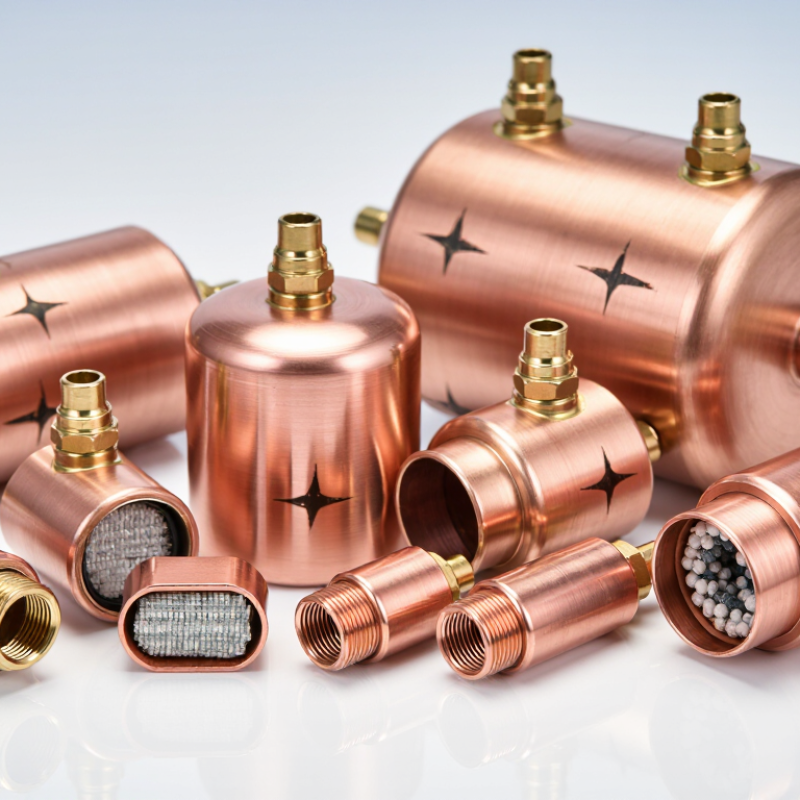
Top 10 Copper Filter Drier Suppliers Worldwide?
Copper filter driers protect refrigeration circuits from moisture, acid, and solid debris. Their copper shells tolerate vibration and support reliable brazed connections. Inside, molecular sieves trap water, while activated alumina can reduce acid after compressor burnout. A small sight glass may reveal bubbles, but it cannot confirm dryness.
Types matter. Bi-directional driers suit heat pumps because refrigerant flow reverses during operation. Standard liquid-line driers fit many air-conditioning systems, while suction-line models capture debris after a compressor failure.
Compatibility depends on refrigerant, oil, pressure, temperature, and flow direction. R-410A, R-32, R-134a, and CO2 systems need different pressure and material checks. Never select by copper size alone.
The 2020 UNEP Cooling Emissions and Policy Synthesis Report projects global cooling demand could more than triple by 2050. That growth increases demand for dependable moisture control and qualified suppliers.
AHRI Standard 700 defines refrigerant purity requirements, but it does not approve every drier design. Technicians should compare desiccant capacity, pressure-drop data, burst pressure, and laboratory testing. A clean, dry tube matters.
Field experience still exposes weak assumptions. Oversized driers can restrict flow. Undersized units may saturate quickly. Installation errors remain common, especially when open tubing sits in humid air.
Top suppliers should provide traceable test data, compatible refrigerant tables, and clear replacement guidance. Performance claims without these details deserve careful review.

When comparing the top 10 copper filter drier suppliers worldwide, filtration rating is a practical starting point. A rated filter may capture particles at a stated micron size, but test conditions can differ. Ask whether the rating is nominal or absolute. That detail changes real protection. In field service, a clogged drier often reveals itself through a rising temperature difference across the shell.
Pressure drop deserves equal attention. Measure it at the refrigerant’s expected mass flow, not only at a catalog reference point. A low initial pressure drop supports compressor efficiency, especially during startup. However, pressure loss can increase as the drier collects debris. Request clean and loaded-flow data. Small fittings may also distort the comparison.
Water capacity shows how much moisture the desiccant can hold under defined conditions. Look for capacity values linked to refrigerant type, temperature, and moisture level. A larger number is not automatically better. The drier must match the system’s charge, pipe size, and operating pressure. Check copper wall thickness, connection quality, burst pressure, and leak-test records. Suppliers with traceable batch testing offer stronger evidence than broad marketing claims. I would also review installation guidance and service feedback from similar systems. Data sheets can be incomplete. That is worth challenging before purchase.
When comparing global copper filter drier suppliers, standards reveal more than catalog claims. ASHRAE testing methods help verify moisture removal, pressure drop, and refrigerant compatibility. A reliable supplier should provide test conditions, not only a capacity number. Ask whether results reflect new, clean driers or field-aged units.
UL requirements focus strongly on safety. For refrigerant-containing components, relevant evaluation can include pressure resistance, leakage control, material suitability, and abnormal operating conditions. The exact listing depends on the assembly, refrigerant, and intended application. Check the certificate scope carefully. A familiar mark does not automatically cover every model or installation.
ISO requirements support manufacturing discipline rather than replacing product testing. ISO 9001 certification can indicate controlled purchasing, traceability, corrective actions, and documented inspections. ISO 5149 may also influence system-level safety, especially with newer refrigerants and higher operating pressures. During supplier audits, inspect brazed joints, capped openings, desiccant sealing, and batch records. In the field, technicians should use dry nitrogen while brazing and follow the flow arrow. Small errors matter. One overlooked moisture source can shorten compressor life. Standards improve confidence, but they cannot compensate for vague technical data or weak installation practice. I would also question suppliers that publish perfect results without explaining test limits, sample sizes, or refrigerant conditions.
Anonymous supplier qualification benchmark based on internationally recognized refrigeration, copper tubing, quality, and product-safety standards
| Benchmark Position | Supplier Qualification Dimension | Typical Product or Process Evidence | Relevant Standard or Reference | Recommended Evaluation Requirement | Evidence Level |
|---|---|---|---|---|---|
| 01 | Refrigerant compatibility | Compatibility matrix covering commonly used HFC, HFO, HC, and natural refrigerants, together with the specified refrigeration oil. | ASHRAE 34 Refrigerant designation and safety classification |
Confirm that the filter drier materials, seals, and desiccant are approved for the intended refrigerant and lubricant combination. | Required |
| 02 | Pressure and leak integrity | Documented shell-pressure testing, helium or calibrated gas leak testing, lot traceability, and test-record retention. | ASHRAE 15 Safety standard for refrigeration systems |
Require a documented pressure and leak-test procedure suitable for the system design pressure and refrigerant application. | Required |
| 03 | Safety certification for refrigerant-containing components | Third-party certification documentation, construction file, ratings, installation limitations, and applicable component markings. | UL 207 Electric refrigerant-containing components |
Where the finished equipment or market requires it, verify that the component construction and ratings are accepted by the applicable certification scheme. | Recommended |
| 04 | Copper tube material and cleanliness | Material certificates, tube-size control, internal cleanliness records, capped ends, and protection against moisture and particulate contamination. | ASTM B280 Seamless copper tube for air-conditioning and refrigeration field service |
Verify copper grade, dimensions, cleanliness, and packaging requirements for refrigeration service. | Required |
| 05 | Desiccant and moisture-control performance | Desiccant type, particle-size distribution, moisture-capacity data, acid-capacity data where applicable, and core-retention design. | Application engineering data Manufacturer validation and laboratory test records |
Match the desiccant formulation and capacity to the refrigerant, oil, system charge, expected moisture load, and operating temperature. | Required |
| 06 | Low-temperature and operating-range capability | Published operating limits, pressure-drop curves, flow-direction information, and capacity data at representative evaporating and condensing conditions. | EN 378 Refrigerating systems and heat pumps — safety and environmental requirements |
Require application data for the actual refrigerant, mass flow, connection size, and minimum and maximum operating temperatures. | Required |
| 07 | Quality management system | Current quality certificate, internal audit records, corrective-action process, calibration control, and change-management procedure. | ISO 9001:2015 Quality management systems |
Prefer suppliers with a valid, independently issued ISO 9001 certificate covering the relevant manufacturing site and product scope. | Recommended |
| 08 | Environmental management and refrigerant sustainability | Environmental objectives, energy and waste controls, restricted-substance management, and support for low-GWP refrigerant applications. | ISO 14001:2015 Environmental management systems |
Use environmental certification and documented material controls as supplier-selection advantages rather than as a universal product requirement. | Value-Added |
| 09 | Product identification and traceability | Permanent part number, batch or date code, dimensional drawing, bill of materials, country-of-origin information, and certificate-of-conformance process. | ISO 9001 quality-control principles Customer and regulatory traceability requirements |
Require traceability from finished filter drier to raw copper, desiccant batch, production line, inspection results, and shipment records. | Required |
| 10 | Technical support and supply continuity | Engineering drawings, selection software or sizing tables, sample approval, technical response process, safety data, and continuity planning. | ISO 9001:2015 Operational planning and customer-support controls |
Evaluate documentation quality, lead-time consistency, minimum order quantities, dual-source planning, and engineering support for system qualification. | Recommended |
Note: ASHRAE, UL, ISO, ASTM, and EN references define different aspects of refrigeration safety, component acceptance, materials, and management systems. The exact certification and testing requirements depend on the refrigerant, system design, destination market, and applicable authority having jurisdiction.
The top 10 copper filter drier suppliers compete across residential cooling, commercial refrigeration, transport, and industrial systems. Their product ranges usually include solid-core, replaceable-core, bi-flow, and solder-connection designs. Market coverage matters as much as product breadth. Suppliers serving North America, Europe, Asia-Pacific, and the Middle East can provide faster technical support and steadier inventory. Grand View Research reported continued growth in global HVAC equipment demand through 2030, driven by urban construction and replacement projects. That demand supports wider use of moisture and contaminant control components.
Professional buyers should compare copper purity, pressure rating, filtration capacity, and refrigerant compatibility. The UNEP 2022 Refrigeration, Air-Conditioning and Heat Pumps Technical Options Committee report highlights the industry’s transition toward lower-impact refrigerants. This shift increases the need for carefully tested driers and accurate installation data. Leading suppliers often offer models for common refrigerants, heat pumps, supermarket cases, and cold-chain equipment. However, supplier rankings are not absolute. Regional certifications, delivery performance, and after-sales engineering can change the practical order. A cheaper unit may create higher service costs. That point is easy to underestimate.
Tips: Check the technical datasheet before comparing prices. Confirm maximum working pressure, connection size, desiccant type, and flow direction. Ask whether test reports cover your refrigerant and operating temperature. MarketsandMarkets has identified Asia-Pacific as a major growth region for HVAC and refrigeration equipment. Yet growth does not guarantee uniform quality. Audit local stock, packaging, and traceability before approving a supplier.
Comparing the top ten suppliers requires more than checking catalog prices. Start with the size range. A reliable supplier should offer compact models for small refrigeration units and larger bodies for commercial systems. Check connection diameter, shell capacity, flow direction, and refrigerant compatibility. A broad range helps, but it can also hide gaps between common sizes. That detail matters during replacement work.
Brazing ports deserve close inspection. Confirm whether ports are straight, angled, or reduced for different copper tube sizes. Port alignment affects installation time, especially inside crowded condensing units. Clean internal surfaces and consistent wall thickness can reduce debris and leakage risks. Ask for dimensional drawings, not only product photographs. Pictures can be misleading.
Warranty terms reveal how seriously a supplier manages quality. Review coverage length, claim procedures, exclusions, and required installation records. A useful warranty should address manufacturing defects without creating unreasonable paperwork. Certification records also need verification. Look for applicable quality systems and product approvals, such as ISO-based manufacturing controls or market-specific safety certifications. Do not accept a certificate number without checking its scope and validity. The framework is not perfect. Field conditions, storage damage, and incorrect brazing can still affect performance. Suppliers should explain those limits clearly, preferably with test reports and traceable batch information.