Leave Your Message

2026 Top Copper Filter Drier Suppliers for Global Buyers?

Global HVACR supply chains are entering 2026 with tighter material scrutiny and stronger demand for dependable components. The International Energy Agency’s Global Critical Minerals Outlook 2024 identifies copper as essential to electrification, power networks, and efficient equipment. That pressure affects every Copper Filter Drier, from the copper tube wall to the molecular sieve core. Small parts still carry large consequences.

The U.S. Environmental Protection Agency continues promoting lower-global-warming-potential refrigerants, while ASHRAE Handbook—Refrigeration guidance emphasizes moisture control, contaminant removal, and correct flow direction. These requirements make supplier evaluation more practical than simply comparing unit prices. Buyers should inspect shell quality, braze compatibility, pressure ratings, desiccant capacity, refrigerant compatibility, traceability, and production consistency. Ask for test records. Check the label twice.

Refrigeration author and HVACR instructor John Tomczyk has repeatedly emphasized a core service principle: “Cleanliness is the key to reliable refrigeration.” That warning fits Copper Filter Drier purchasing perfectly. A poorly sealed package can absorb moisture before installation. An undersized drier can restrict flow during peak operation. A copied specification may also hide weak filtration performance.

This guide examines leading Copper Filter Drier suppliers for global buyers in 2026. It considers manufacturing experience, certification evidence, export capability, technical support, and documented quality controls. No ranking is perfect. Regional availability, refrigerant changes, and freight conditions can quickly alter the best choice. The strongest supplier is not always the cheapest. It is the one that protects system reliability after the carton disappears into the warehouse.
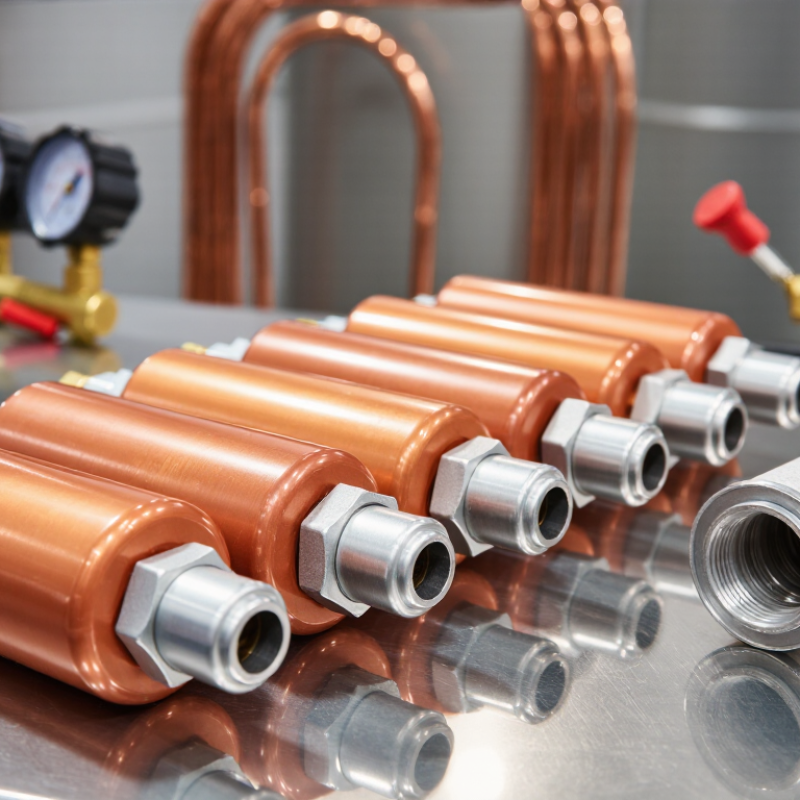
2026 Top Copper Filter Drier Suppliers for Global Buyers?

What Copper Filter Driers Are and Why They Matter in Refrigeration

What Copper Filter Driers Are and Why They Matter in Refrigeration

Copper filter driers are small, sealed components installed in refrigeration liquid lines. Their core usually combines a molecular sieve with filtration media. The sieve captures moisture, while the filter traps metal dust and installation debris. Some models also help control acid formed after compressor overheating.

This matters because moisture can freeze at the expansion device, corrode copper tubing, and damage compressor insulation. ASHRAE Handbook—Refrigeration identifies moisture and contaminants as major threats to reliable system operation. The International Energy Agency reported that space cooling used about 2,020 TWh of electricity in 2016. Demand could reach 6,200 TWh by 2050. Small component failures may therefore create large efficiency and maintenance costs across global equipment fleets.

Tips: Select the drier by refrigerant, system capacity, connection size, and required moisture capacity. Check pressure-drop data, not only the shell diameter. Install it in the correct flow direction and replace it after a burnout or major circuit opening. Keep the package sealed until installation. This detail is easy to miss. Copper shells also need careful brazing; excessive heat can damage internal materials. Field experience shows that an oversized drier is not automatically safer. It may increase cost and complicate servicing. A better choice matches the operating conditions, expected contamination level, and manufacturer’s technical data.
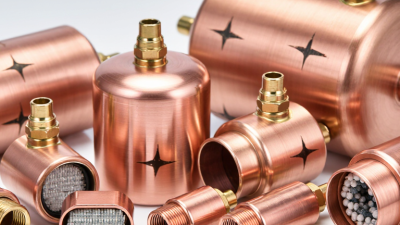
Key Factors for Ranking Copper Filter Drier Suppliers in 2026

Ranking copper filter drier suppliers in 2026 requires more than comparing prices. Global buyers should examine copper purity, wall thickness, brazing quality, and desiccant performance. A reliable supplier can provide material certificates, batch numbers, and test records. These documents show whether production controls are consistent. They also support traceability when a shipment reaches a distant warehouse.

Product testing deserves close attention. Ask for pressure resistance data, moisture removal results, particle control, and leakage inspection methods. Suppliers with experienced engineers should explain how their driers perform in different refrigeration systems. Clear technical answers matter. Vague claims do not. Buyers should also review production capacity, packaging protection, lead times, and replacement procedures. A low quote may hide weak inspection or unstable delivery. That risk is easy to underestimate.

Tips: Request samples from several suppliers and inspect the copper surface, connection size, and sealing condition. Compare test reports using the same standards. Check whether certificates match the actual shipment. Speak with technical staff, not only sales representatives. References from long-term industrial customers can add useful evidence, but they are not perfect proof. Some suppliers look strong on paper and disappoint during urgent orders. A practical trial order may reveal more than a polished presentation. Pricing should remain important, but it should not control the entire ranking.

Leading Copper Filter Drier Suppliers for Global Buyers

Global buyers are seeking dependable copper filter drier suppliers as cooling demand expands. The International Energy Agency’s The Future of Cooling reports that global air-conditioner stock could rise from about 1.6 billion units to 5.6 billion by 2050. That growth increases demand for reliable moisture and contaminant control in refrigeration circuits.

Leading copper filter drier suppliers should provide more than standard dimensions. Buyers need clear data on moisture capacity, filtration efficiency, pressure limits, refrigerant compatibility, and connection quality. AHRI Standard 711 offers a useful reference for evaluating liquid-line filter-drier performance. Suppliers with batch traceability, controlled brazing processes, and documented leak testing are easier to audit. Small details matter. A clean internal core can protect compressors during long operating cycles.

The International Copper Study Group continues to identify strong global copper demand, supported by electrification and equipment manufacturing. This may create material-cost pressure for suppliers and buyers. A low purchase price can look attractive. It can also be misleading when wall thickness, desiccant quality, or packaging protection is reduced. Experienced buyers should compare technical files, sample results, and field feedback before approving a supplier. No supplier is perfect. Even a well-qualified factory may need stronger evidence for humid shipping routes, recycled copper content, or newer refrigerants. That gap deserves attention.

How to Compare Product Quality, Capacity, and Technical Support

2026 Top Copper Filter Drier Suppliers for Global Buyers

Comparing copper filter drier suppliers requires more than checking price or catalog images. Copper supply remains exposed to volatility. The USGS estimated global mine production at about 22 million metric tons in 2024. The International Copper Study Group forecast refined copper use near 27 million tonnes for 2025. Buyers should verify material consistency, not assume it.

Request mill certificates, copper grade, wall-thickness records, leak-test results, and batch traceability. Check moisture capacity, pressure-drop data, particle retention, and refrigerant compatibility. Testing should follow applicable safety and performance standards. Supplier capacity also needs careful review. Ask about monthly output, tooling availability, production lead time, safety stock, and backup processes. Annual capacity alone can mislead. A large factory may still miss a small urgent order.

Tips: Compare three recent lots, not one sample. Ask for a corrective-action report from a previous failure. Technical support should provide drawings, installation guidance, compatibility tables, and response targets. During audits, inspect brazing surfaces, packaging, labeling, and storage conditions. Small details matter. A clean datasheet is not proof of stable quality. Field reviews sometimes reveal inconsistent desiccant filling or delayed engineering replies. That weakness deserves attention. Also, avoid accepting “custom support” without names, timelines, and measurable service commitments.

2026 Top Copper Filter Drier Suppliers for Global Buyers? - How to Compare Product Quality, Capacity, and Technical Support

Comparison framework for industrial copper filter drier suppliers. Capacity figures are expressed as indicative annual production ranges; actual performance depends on model, refrigerant, connection size, testing method, and order mix.
Supplier Profile Primary Manufacturing Region Typical Product Range Copper Tube Sizes Maximum Working Pressure Moisture / Acid Control Indicative Annual Capacity Quality Certifications Typical Lead Time Technical Support Buyer Suitability Overall Score
Supplier Profile 01 East Asia Solid-core and loose-fill copper filter driers for residential and light commercial refrigeration 1/4" to 7/8" ODF Up to 4.7 MPa, model dependent High-efficiency molecular sieve core; acid-adsorbing options available 2.0–3.5 million units ISO 9001; selected models tested to UL/EN requirements 25–40 days Refrigerant compatibility charts, installation guidance, sample testing High-volume OEM 8.8 / 10
Supplier Profile 02 South Asia Hermetic copper filter driers for split air conditioners, heat pumps, and cold-chain equipment 1/4" to 3/4" ODF Up to 4.5 MPa Desiccant blends for water, acid, and particulate control 1.2–2.0 million units ISO 9001; RoHS documentation available 30–45 days Application selection support and brazing process recommendations Cost-sensitive sourcing 8.1 / 10
Supplier Profile 03 Western Europe High-performance bi-flow and replaceable-core filter driers for commercial refrigeration 1/4" to 1-1/8" ODF Up to 4.8 MPa Optimized for POE oil, HFO/HFC refrigerants, and acid clean-up 0.5–1.0 million units ISO 9001; CE and pressure-equipment compliance by model 35–60 days Detailed selection software, failure analysis, and field engineering Technical applications 9.1 / 10
Supplier Profile 04 North America Heavy-duty copper filter driers for supermarket systems, transport refrigeration, and heat pumps 1/4" to 1-3/8" ODF Up to 4.5 MPa High-capacity cores for moisture, acid, wax, and solid-particle removal 0.7–1.4 million units ISO 9001; UL-recognized or equivalent testing on selected ranges 30–55 days System troubleshooting, commissioning support, and technical documentation Commercial HVAC/R 8.9 / 10
Supplier Profile 05 East Asia Compact copper filter driers for mini-split systems, freezers, dehumidifiers, and OEM assemblies 1/4" to 5/8" ODF Up to 4.2 MPa Molecular sieve media with consistent particle filtration 3.0–5.0 million units ISO 9001; RoHS and REACH declarations available 20–35 days Standard datasheets, drawing review, and private-label packaging support Large OEM programs 8.4 / 10
Supplier Profile 06 Southeast Asia Export-oriented copper filter driers for refrigeration service wholesalers and equipment assemblers 1/4" to 7/8" ODF Up to 4.3 MPa Standard and acid-removal cores for common HFC and HFO applications 0.8–1.5 million units ISO 9001; batch inspection records available 30–50 days Multilingual sales engineering and basic product matching Regional distribution 7.9 / 10
Supplier Profile 07 Eastern Europe Custom copper filter driers for industrial refrigeration, process cooling, and heat-pump projects 1/4" to 1-1/8" ODF Up to 4.6 MPa Configurable desiccant selection based on refrigerant and oil chemistry 0.3–0.7 million units ISO 9001; CE technical files available 40–65 days Engineering review, custom drawings, and project documentation Special projects 8.3 / 10
Supplier Profile 08 Latin America Standard copper filter driers for aftermarket replacement and residential air-conditioning service 1/4" to 3/4" ODF Up to 4.2 MPa General-purpose molecular sieve for moisture and particulate removal 0.4–0.9 million units Local quality system; third-party testing available on request 35–60 days Installation instructions and basic refrigerant compatibility support Aftermarket supply 7.5 / 10
Key buyer checks: verify pressure ratings under the intended refrigerant and temperature conditions, request moisture-capacity test data, confirm copper cleanliness and brazing quality, review lot traceability, and test technical response time before placing a large order.

Global Purchasing, Compliance, and Logistics Considerations

Global buyers sourcing copper filter driers in 2026 should evaluate suppliers beyond unit price. Request material certificates, pressure-test reports, dimensional drawings, and batch traceability records. Copper purity and brazed-joint quality can affect system reliability. Ask whether documents match the exact production lot.

Compliance requirements differ across destination markets. Confirm the correct customs classification before shipment. Check applicable rules for pressure equipment, restricted substances, packaging, and refrigerant systems. Suppliers should provide clear declarations for materials and manufacturing processes. A recent certificate is more useful than a generic file from several years ago.

Logistics details deserve equal attention. Specify the Incoterm, export documents, pallet dimensions, and moisture protection in the purchase contract. Individually capped connections help prevent dust and oxidation during ocean transport. Request carton drop-test evidence when the route includes multiple transfers. Calculate landed cost, including duties, inspection fees, storage, and possible demurrage. Sample approval should include a physical inspection, not only photographs. Even experienced buyers sometimes overlook seasonal production delays. That mistake can disrupt compressor assembly schedules. Keep a backup source qualified, but do not approve it without testing. Supplier communication may look strong before payment, then weaken during a quality dispute. Written response times, corrective-action procedures, and replacement terms provide practical protection.