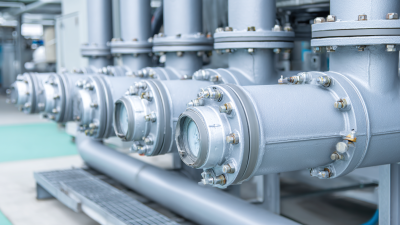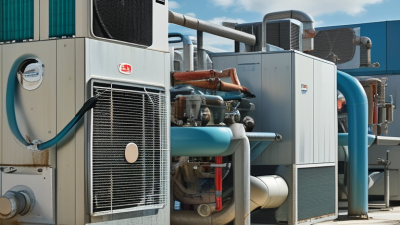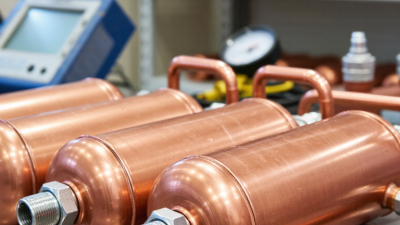


The Liquid Line Filter Drier is a small component with a critical HVACR responsibility. It removes moisture, acid, particles, and other contaminants before they reach the expansion device or compressor. A blocked drier can create measurable pressure loss, unstable cooling, and expensive service calls.
Industry demand is closely linked to refrigeration replacement, air-conditioning growth, and stricter refrigerant management. The International Energy Agency’s The Future of Cooling reports that space-cooling demand could more than triple by 2050 without efficiency improvements. UNEP’s 2023 Global Cooling Watch also highlights rapid cooling growth and the transition toward lower-impact refrigerants. These trends increase the need for reliable filtration, compatible desiccants, and carefully rated components.
This article examines ten leading Liquid Line Filter Drier manufacturers through practical criteria. These include product range, refrigerant compatibility, pressure ratings, moisture capacity, global availability, certifications, and technical support. Manufacturer information, AHRI guidance, published product data, and market research from Grand View Research and MarketsandMarkets help establish the comparison. However, no ranking is perfect. Product performance may change with installation quality, system cleanliness, operating temperature, and refrigerant choice. Field experience still matters.
Look closely at the details.
A compact shell does not guarantee equal protection. Some models use replaceable cores, while others favor sealed designs for faster installation. Connection size also matters, especially where a few extra fittings can increase turbulence and pressure drop. The final selection should match the equipment manufacturer’s requirements and the actual service environment, not only brand reputation.
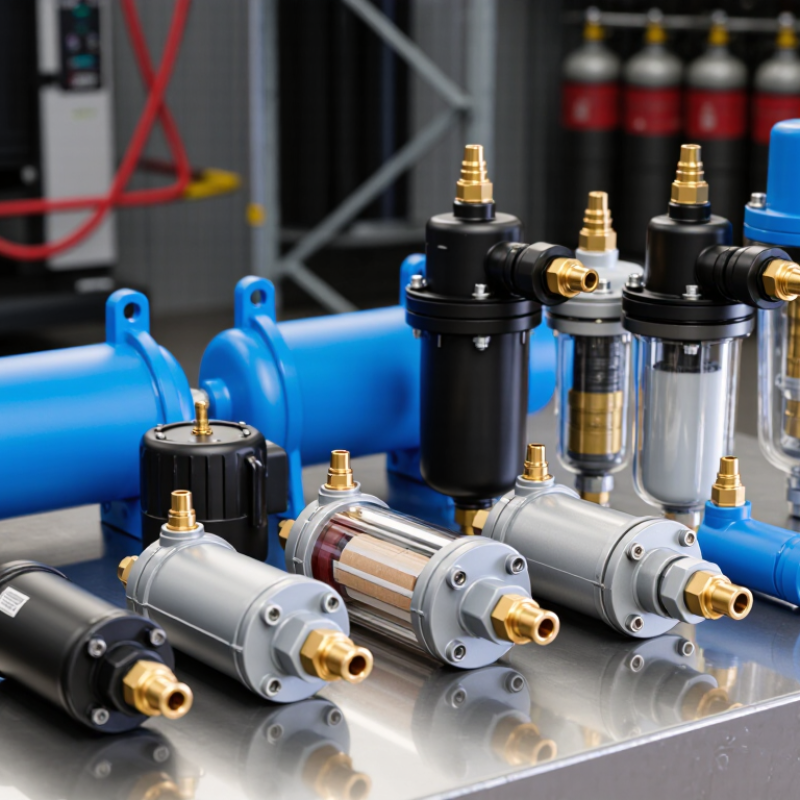
Liquid line filter driers protect refrigeration and air-conditioning systems from moisture, acids, dirt, and metal particles. Installed in the liquid line, they help prevent ice formation at expansion devices and reduce corrosion inside the circuit. Their solid-core media usually combines moisture-absorbing and contaminant-trapping materials. A reliable design must maintain low pressure drop while offering sufficient dirt-holding capacity.
Selection depends on refrigerant type, system capacity, operating temperature, and connection size. A drier that is too small may restrict liquid flow. An oversized unit can increase cost without improving protection. Applications include commercial refrigeration, cold storage, heat pumps, and comfort cooling systems. During commissioning, technicians should check flow direction, temperature changes, and signs of abnormal pressure loss. A warm outlet may indicate restriction, but diagnosis should include wider system conditions.
Tips: Replace the drier after compressor burnout, major component replacement, or prolonged system exposure to air. Keep the package sealed until installation. Use clean tubing practices and avoid forcing fittings. In my view, manufacturer data deserves careful review, but field conditions can challenge laboratory ratings. This is where selection becomes less certain. Record pressure readings before and after replacement, then compare them during normal operation. A small log often reveals problems that a single inspection misses.
Approximate saturation pressure at 40°C for common refrigerants. These values illustrate why liquid-line filter drier housings, cores, seals, and connections must be selected according to the refrigerant and the system’s maximum allowable working pressure.
Liquid-line filter driers remove moisture, acid, particles, and other contaminants from refrigeration circuits. Actual pressure varies with refrigerant composition, temperature, glide, and operating conditions, so final component selection should follow the equipment manufacturer’s specifications and applicable safety standards.
Ranking liquid line filter drier manufacturers requires more than comparing catalog prices. Field experience shows that moisture capacity, contaminant retention, and pressure drop affect system stability. A reliable manufacturer publishes test methods and performance data for each product series. Engineers should review refrigerant compatibility, temperature ranges, connection options, and core construction. Small details matter.
Quality control deserves close attention. Strong manufacturers maintain batch traceability, calibrated testing equipment, and documented inspection procedures. Useful evidence includes burst-pressure results, filtration ratings, desiccant capacity, and leakage records. Certifications can support credibility, but they should not replace technical verification.
Factory audits, sample testing, and customer service response times provide practical evidence. Ask difficult questions.
A fair ranking should also measure consistency across production batches. One excellent sample does not prove long-term reliability. Delivery performance, packaging quality, technical training, and replacement availability influence total operating risk. Manufacturers serving demanding installations should explain installation limits and recommended replacement intervals clearly. Their guidance must be usable by technicians in the field.
Some comparisons remain imperfect. Public data may omit test conditions, making direct comparisons uncertain. A lower pressure drop can also mean a different filtration trade-off. Therefore, evaluators should record assumptions and avoid treating one specification as decisive. The strongest ranking combines laboratory evidence, installer feedback, warranty history, and observed performance under realistic load changes.
Choosing among the top 10 liquid line filter drier manufacturers requires more than comparing prices. Reliable manufacturers publish filtration ratings, moisture capacity, pressure limits, and compatibility data. These details help technicians match a drier with refrigerant type, system size, and operating conditions.
Field experience also matters. A well-designed filter drier should capture moisture, acid, and solid particles without creating excessive pressure drop. Inspectors often check connection quality, shell strength, internal filtration media, and service documentation. Test reports from recognized laboratories can provide useful evidence. However, marketing claims alone are not enough.
Tips: Confirm the rated capacity before installation. Check the arrow for correct refrigerant flow. Replace the drier after major compressor work or severe contamination. Keep unused units sealed until installation.
Manufacturers with strong technical support usually provide clear sizing charts and installation guidance. They may also explain performance at different temperatures and flow rates. That transparency is valuable during troubleshooting. Still, no product fits every system. I have seen oversized driers installed as a precaution, yet they sometimes increased cost without improving protection. A careful review of operating data would have been better. Technicians should record pressure readings, temperature changes, and replacement dates. This practical evidence can reveal whether a selected manufacturer consistently meets real system needs.
When comparing the top ten liquid line filter drier manufacturers, product depth matters more than catalogue size. Reliable suppliers usually offer solid-core and replaceable-core designs, copper or steel shells, bi-flow models, and multiple connection sizes. Products should support common refrigerants, suitable pressure ratings, and varied system capacities. In field inspections, clear flow arrows, dry packaging, and readable batch markings can reveal manufacturing discipline. A polished catalogue is helpful, but it is not proof of consistent quality.
Certifications require careful checking. Look for ISO 9001 quality systems, pressure-related approvals, electrical or material compliance where applicable, and region-specific documentation. CE, UL, RoHS, or equivalent approvals may apply differently by product and market.
Global coverage also includes local stock, technical support, spare cores, export packaging, and realistic delivery times. A supplier may claim worldwide service, yet have weak after-sales support in smaller regions. That gap deserves attention.
Tips: Request current certificates, pressure test records, and refrigerant compatibility tables. Compare warranty terms and replacement availability. Ask for samples before approving large orders. Confirm whether local distributors understand installation practices and recovery procedures. One overlooked detail is packaging: damaged filter driers can absorb moisture before installation. I would also question unusually low pricing. It may be efficient sourcing, but it may also indicate thinner materials or limited testing. Verify the evidence.
Selecting among the Top 10 liquid line filter drier manufacturers requires more than comparing prices. The right supplier should match your refrigerant, oil, system capacity, and installation conditions. IEA’s The Future of Cooling reports that space-cooling energy demand could more than triple by 2050. Clean, properly protected circuits will matter even more.
Start with verified performance data. Check moisture capacity, acid-removal capability, pressure drop, flow direction, and maximum working pressure. Ask for test results under realistic temperatures, not only laboratory conditions. The product should comply with recognized refrigeration standards, such as AHRI Standard 710 for refrigerant purity. Confirm compatibility with the refrigerant and lubricant used in your system.
Small details matter.
A reliable manufacturer should provide batch traceability, dimensional drawings, replacement guidance, and clear warranty terms. During selection, I would also inspect the shell coating, brazing quality, connection size, and core design. A replaceable-core model may reduce service waste in larger systems, while a sealed model can simplify compact installations. UNEP’s 2023 Global Cooling Watch warns that cooling demand may more than triple by 2050, increasing pressure on efficiency and maintenance practices. Still, published capacity tables can be difficult to compare. Some data may not reflect high ambient temperatures or frequent compressor cycling. That is where contractor feedback and field testing remain valuable. A low purchase price can become expensive after moisture contamination, pressure loss, or repeated replacement.
| No. | Selection Dimension | What a Qualified Manufacturer Should Demonstrate | Why It Matters to the System | Documents and Technical Data to Request |
|---|---|---|---|---|
| 1 | Refrigerant and Oil Compatibility | Compatibility with the specified refrigerant, lubricant, elastomers, soldering materials, and operating temperature range. | Critical Incompatible materials can cause chemical degradation, leakage, swelling, or loss of drying performance. |
Product compatibility chart, refrigerant approval list, oil compatibility information, material specification, and application limitations. |
| 2 | Pressure Rating and Safety Compliance | A clearly stated maximum allowable working pressure and suitable pressure-temperature limits for the intended refrigeration circuit. | Critical The drier must safely withstand normal operation, pressure fluctuations, and applicable safety requirements. |
Pressure-rating documentation, burst or proof-test information, conformity declarations, and applicable approvals such as UL 207 or regional requirements. |
| 3 | Water-Removal Capacity | Published water capacity measured using a defined test method, together with the refrigerant and temperature conditions used for testing. | Critical Moisture can contribute to corrosion, ice formation, lubricant problems, and acid generation in the refrigeration system. |
Water-capacity test data, test conditions, recommended system charge range, and sizing guidance for new installations and burnouts. |
| 4 | Acid and Contaminant Control | A documented desiccant formulation and contaminant-control capability appropriate for normal service and, where required, compressor burnout cleanup. | High Effective contaminant control helps protect compressors, expansion devices, valves, and heat-transfer surfaces. |
Desiccant technical data, acid-capacity results, particulate-retention information, and separate recommendations for cleanup driers. |
| 5 | Flow Capacity and Pressure Drop | Rated refrigerant flow capacity and pressure-drop curves covering the refrigerant, evaporating or condensing conditions, and connection orientation. | High Excessive pressure drop can reduce system efficiency and may cause flash gas or unstable expansion-device operation. |
Capacity tables, pressure-drop curves, rating basis, maximum recommended velocity, and selection software or sizing charts. |
| 6 | Connection and Installation Options | Connection sizes and types suitable for the piping design, including solder, brazed, flare, or other specified connections where applicable. | High Correct connections reduce installation time and lower the risk of leakage, restriction, or incorrect field assembly. |
Dimensional drawings, connection specifications, installation instructions, allowable brazing practices, and flow-direction markings. |
| 7 | Heat-Pump and Bi-Directional Suitability | A product specifically designed and tested for reverse-flow applications when used in heat pumps or reversible refrigeration systems. | Application-dependent Ordinary single-direction driers may not provide suitable performance or flow behavior during system reversal. |
Bi-directional flow rating, pressure-drop data in both directions, installation orientation requirements, and approved heat-pump applications. |
| 8 | Construction Quality and Leak Integrity | Controlled manufacturing processes, corrosion-resistant construction, reliable brazed or welded joints, and documented leak testing. | Critical Leak integrity protects refrigerant charge, system performance, technicians, and the environment. |
Material certificates, production leak-test procedures, quality-control records, traceability policy, and quality-management certification such as ISO 9001. |
| 9 | Serviceability and Replacement Strategy | A clear replacement procedure and, where relevant, replaceable-core or serviceable designs for systems requiring regular maintenance. | Medium to High Serviceable designs can reduce maintenance time and operating cost in larger or contamination-sensitive systems. |
Replacement instructions, core or cartridge availability, recommended replacement intervals, torque values, and compatible service components. |
| 10 | Technical Support and Supply Reliability | Accurate selection assistance, responsive engineering support, stable production capacity, batch traceability, and consistent delivery performance. | High Reliable support and availability help prevent incorrect sizing, project delays, and inconsistent field performance. |
Technical response process, lead-time information, minimum order quantities, warranty terms, regional stock policy, product-change notifications, and reference projects. |