Top Copper Filter Drier Manufacturers for Global Buyers
Selecting reliable Copper Filter Drier manufacturers is a practical decision for refrigeration and air-conditioning businesses worldwide. These components help remove moisture, acids, and solid contaminants from sealed systems. A suitable drier can protect compressors, reduce blockage risks, and support stable cooling performance. Small parts matter.
This guide introduces leading manufacturers for global buyers through a technical and purchasing-focused lens. It considers copper quality, filtration capacity, pressure resistance, welding consistency, connection options, and production control. Factory experience also matters. Manufacturers with documented testing procedures can provide clearer evidence than suppliers relying only on attractive catalogs. Useful records may include material certificates, leak-test results, batch information, and dimensional inspection reports.
Real purchasing conditions are rarely perfect. Lead times can change, packaging may fail, and product data can be incomplete. Buyers should verify claims directly and request samples before placing large orders. A clean copper shell is not enough. Internal filter media, desiccant performance, and compatibility with the intended refrigerant system require careful review. Certification requirements also differ across markets, so technical documents should be checked early.
The manufacturers discussed here are assessed for product consistency, export experience, communication quality, and after-sales reliability. Pricing is included where relevant, but the lowest quotation may create higher replacement costs later. Field feedback, distributor relationships, and transparent quality controls offer stronger purchasing signals. With practical comparison and independent verification, global buyers can choose a Copper Filter Drier supplier with greater confidence and fewer installation surprises. Some details still require confirmation. That is normal.
Copper Filter Driers: Purpose, Design, and Operating Principles
Copper Filter Driers: Purpose, Design, and Operating Principles
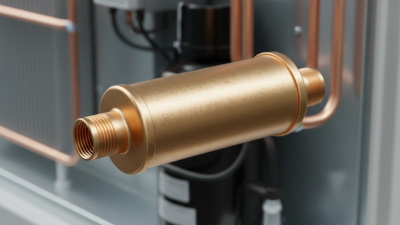
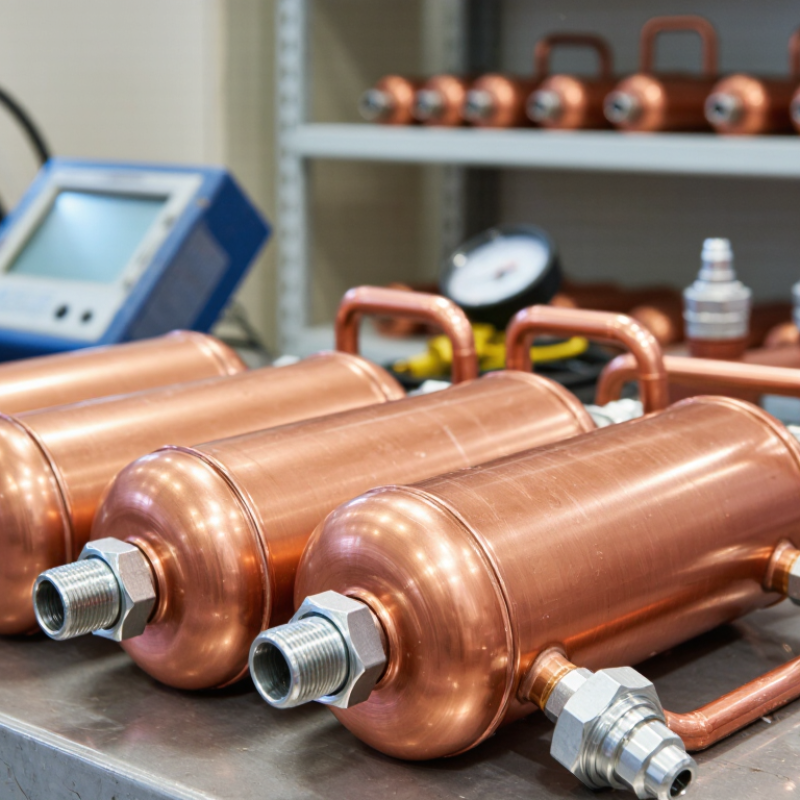
Copper filter driers protect refrigeration circuits from moisture, acids, and solid debris. Their copper shell supports heat transfer and resists external corrosion in many installations. Inside, a desiccant core captures water molecules before they reach the expansion device or compressor. A fine filter also traps brazing residue and metal particles. Small contamination can cause expensive restrictions.
The design is simple but not casual. A typical unit uses inlet and outlet connections, a sealed shell, and molded desiccant material. During operation, liquid refrigerant flows through the drier. The desiccant adsorbs moisture, while the filter section reduces particle migration. Correct flow direction matters. Reversed installation can reduce protection.
The IEA’s The Future of Cooling report projects that cooling electricity demand could more than triple by 2050 without efficiency improvements. This trend increases the need for reliable moisture control in commercial and residential systems. The ASHRAE Handbook—Refrigeration identifies moisture, acids, and particulates as major threats to refrigeration performance. Field technicians should select capacity by refrigerant type, system charge, pressure rating, and expected contamination level. Bigger is not always better. An oversized core may add cost without improving protection.
Real installations still expose a weakness: poor evacuation can overload the drier quickly. Therefore, technicians should evacuate deeply, replace damaged units, and verify pressure drop during commissioning. Manufacturer claims require practical checking. That part is often neglected.
Copper Filter Driers: Purpose, Design, and Operating Principles
Common nominal copper connection sizes used when specifying filter driers for refrigeration and air-conditioning systems.
Copper filter driers combine a desiccant core with filtration media to remove moisture, acids, and solid particles from the refrigerant circuit. The connection size must match the system tubing and required refrigerant flow. The values shown are standard nominal copper tube outside diameters; they indicate connection size, not filter-drier capacity or performance.
Key Specifications for Selecting a Copper Filter Drier Manufacturer
Top Copper Filter Drier Manufacturers for Global Buyers
Selecting a copper filter drier manufacturer requires more than comparing catalog prices. Check the drier’s connection size, rated pressure, filtration level, and moisture capacity. These specifications should match the refrigeration system, refrigerant type, and expected operating temperature. Reliable manufacturers provide material certificates, pressure-test records, and batch traceability. Pure, corrosion-resistant copper supports safer brazing and longer service life. Ask whether every unit receives leak testing before shipment.
Manufacturing consistency matters. Inspect the filter core design, desiccant quantity, and internal flow direction. A strong supplier should explain how the product handles water, acids, and fine particles. Confirm burst pressure and working pressure separately; they are not the same value.
Packaging also deserves attention. Sealed caps and dry storage reduce contamination before installation. In practical sourcing, small details often create large service problems. A low price can still be expensive. Some specifications may look sufficient but lack independent verification.
Tips: Request a sample and its complete test report. Compare pressure ratings in the same unit system. Check certificates against the actual production batch. Clarify minimum order quantities, lead times, and replacement procedures. If the supplier avoids technical questions, reconsider the purchase. Do not rely only on polished photographs. Field feedback, inspection records, and clear communication reveal manufacturing reliability more accurately. One imperfect point remains: published data may not reflect every operating condition, so validate performance with a qualified engineer.
Leading Copper Filter Drier Manufacturers for Global Buyers
Leading copper filter drier manufacturers serve refrigeration, air-conditioning, and heat pump markets worldwide. Their products remove moisture, acids, and solid particles from sealed systems. A reliable manufacturer controls copper purity, tube thickness, brazing quality, and desiccant filling. These details affect pressure resistance and drying performance.
Look for drawn copper shells with clean internal surfaces and secure connections. Leading manufacturers should provide pressure test results, moisture capacity data, and batch traceability. Production records should identify materials, inspection stages, and packing dates.
Ask whether each model supports the refrigerant and operating range required for your equipment. A factory visit or sample evaluation can reveal more than a polished catalog.
No supplier is perfect. Small process variations still deserve attention.
Global buyers also need stable export packaging and clear technical communication. Moisture-proof seals, strong cartons, and protective caps help prevent contamination during long transport. Manufacturers with experienced engineering teams can adjust dimensions, connection types, and labeling for different markets.
However, customization may increase lead time or create quality risks if specifications remain vague. Confirm drawings before production. Check samples after arrival.
A practical purchasing review should compare test evidence, production consistency, response speed, and after-sales handling, not only unit price. Some suppliers appear competitive until replacement costs and installation delays are included.
Quality Standards, Testing, and Manufacturing Capabilities
For global buyers, a copper filter drier manufacturer should prove more than production volume. Material certificates should identify copper grade, wall thickness, brazing alloy, and desiccant type. Each batch needs traceable lot numbers. ISO Survey 2023 recorded more than 1.26 million ISO 9001 certificates worldwide, but certification alone does not prove drier performance. Audit the actual factory process.
Testing should follow recognized methods, including AHRI Standard 711-2021 for liquid-line filter-drier performance. Ask for water-capacity, acid-capacity, filtration, pressure-drop, and leak-test results. Burst testing also matters. A reliable plant uses calibrated instruments, controlled drying ovens, and documented sampling plans. Refrigerant compatibility should be checked across the intended refrigerant and lubricant combinations. The details are physical. Look for clean copper ends, sealed packaging, and no loose desiccant particles. No test plan is perfect. Buyers should still question unusual results.
Tips: Request recent third-party reports, not only internal certificates. Compare test conditions carefully. A capacity result without refrigerant, temperature, or flow data is incomplete. Confirm whether results represent one sample or a full production lot. Review corrective-action records, too. Weak suppliers may hide recurring failures. That is a warning. UNEP’s 2023 Cooling Emissions and Policy Synthesis Report highlights the growing importance of efficient cooling equipment, making component reliability increasingly important for international procurement.
Procurement, Customization, and International Supply Considerations
Selecting top copper filter drier manufacturers requires more than comparing unit prices. Experienced buyers check copper tube dimensions, desiccant capacity, pressure rating, and refrigerant compatibility. Ask for batch test records, material certificates, and leakage results. A reliable factory should explain how it controls brazing cleanliness and moisture exposure during assembly. Small details matter: a dented connection can delay installation, while loose desiccant can contaminate a system. Request samples from the same production line, not showroom pieces. This is practical evidence.
Customization may include inlet sizes, shell length, molecular sieve formulation, connection type, labeling, and carton design. Share drawings and operating conditions early. Include refrigerant, temperature range, working pressure, flow direction, and expected service environment. Engineers should confirm performance changes before approving a private specification. A cheaper custom design can create hidden replacement problems. It happens. Request a pilot order, dimensional inspection, and pressure testing before volume production. Keep revision numbers on every drawing.
International supply depends on more than manufacturing capacity. Confirm lead times for raw copper, production slots, inspection windows, and port handling. Use moisture-resistant inner packaging, sealed ends, and shock-resistant cartons. Ask how the supplier manages damaged cartons and shipment discrepancies. Export documents must match the product description, quantities, and destination requirements. Incoterms, insurance, and customs responsibilities should be written clearly. Time-zone communication can expose weak follow-up. A named technical contact helps. Still, no supplier is perfect; forecast changes, packaging errors, and delayed approvals can occur. Build inspection checkpoints and realistic buffer days into the purchasing plan.



 Email
Email Whatsapp
 WeChat