Leave Your Message

China Top Condenser Motor Manufacturers?

Choosing among China’s top condenser motor manufacturers requires more than comparing catalog prices. A reliable supplier should demonstrate engineering experience, stable production, and clear product documentation. This guide examines manufacturers that serve refrigeration, HVAC, commercial cooling, and industrial equipment markets.

A dependable Condenser Motor should operate quietly, resist heat, and maintain consistent torque during long duty cycles. Important details include voltage range, rotation direction, insulation class, bearing design, and fan compatibility. Factory audits can reveal practical differences. Look for clean assembly areas, calibrated test equipment, traceable materials, and documented inspection records. Sample testing should include temperature rise, vibration, noise, starting performance, and endurance under realistic loads.

Certifications matter, but certificates alone do not prove manufacturing quality. Buyers should verify certificate scope, testing dates, and the exact factory address. Communication also matters when specifications change. A capable manufacturer can explain motor curves, mounting dimensions, wiring options, and replacement compatibility without hiding limitations. After-sales support, spare-part availability, packaging quality, and delivery consistency deserve equal attention.

No list is permanent. Market rankings change.

Some suppliers appear strong online but provide limited technical evidence. That gap requires caution. This article therefore focuses on verifiable capabilities rather than promotional claims. It considers production experience, engineering resources, quality controls, export performance, and customer feedback. The assessment is not perfect, because supplier data and factory conditions can change. Still, these practical criteria offer a clearer starting point for identifying trustworthy Chinese Condenser Motor manufacturers and selecting a partner suited to real operating conditions.

China Top Condenser Motor Manufacturers?

What Is a Condenser Motor and Where Is It Used?

China Top Condenser Motor Manufacturers?

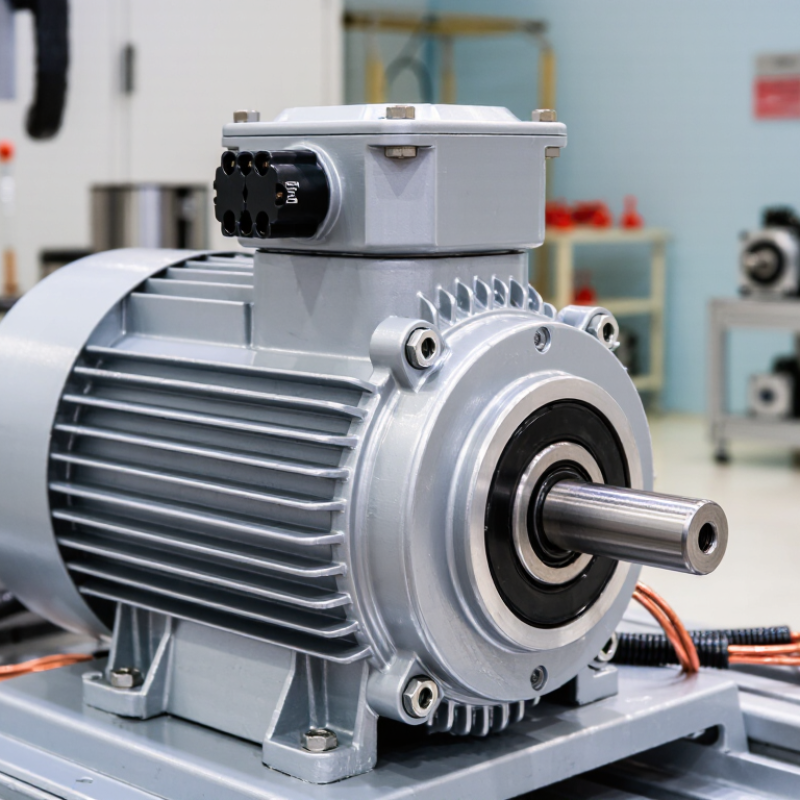
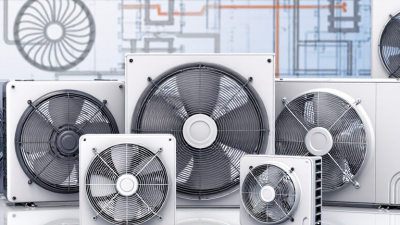
A condenser motor drives the outdoor fan in an air-conditioning or refrigeration system. The fan pulls air across the condenser coil. Heat then leaves the refrigerant and moves into the surrounding air. It is not the compressor motor. That distinction matters during maintenance.

These motors appear in split air conditioners, rooftop units, heat pumps, cold rooms, display freezers, and commercial chillers. Common designs include permanent split capacitor motors and electronically commutated motors. The second type can improve speed control and part-load efficiency. However, performance depends on airflow, voltage stability, bearings, and correct fan-blade matching.

The International Energy Agency reports that space cooling uses nearly 10% of global electricity. The U.S. Energy Information Administration’s 2018 CBECS data places commercial cooling near 15% of building electricity use. These figures explain why condenser motor efficiency deserves practical attention. A motor with lower rated wattage is not automatically better. Technicians should check torque, rotation, insulation class, noise, IP protection, and operating temperature. I have seen selection errors caused by comparing only frame size. That shortcut can create weak airflow and high discharge pressure. Manufacturer evaluation should include test reports, production consistency, and after-sales technical support. Laboratory data helps, but field conditions still reveal the truth.

China Top Condenser Motor Manufacturers? What Is a Condenser Motor and Where Is It Used?

A condenser motor is an electric motor that drives the fan in the outdoor condenser section of air-conditioning and refrigeration equipment. Its operating speed is influenced by the motor pole count and the power-supply frequency.

The chart shows theoretical synchronous speeds calculated by the formula 120 × frequency ÷ number of poles. Actual induction-motor speed is slightly lower because of slip. Condenser fan motors are used in outdoor air-conditioning units, heat pumps, refrigeration systems, condensing units, and commercial cooling equipment.

Key Factors for Evaluating Chinese Condenser Motor Manufacturers

Selecting China’s top condenser motor manufacturers requires more than comparing quotations. IEA’s Energy Efficiency 2023 report states that electric motor systems consume about half of global electricity. That makes efficiency a commercial issue, not merely a technical detail. Request rated power, speed, current, torque, efficiency, noise, and temperature-rise test records. Confirm testing follows IEC 60034 procedures. Look beyond price.

A reliable factory should show traceable copper winding records, rotor-balance results, bearing specifications, and end-of-line inspection data. Ask for samples from three production batches, not one carefully prepared unit. The U.S. Department of Energy’s Motor Systems Market Assessment highlights the importance of system efficiency and correct motor selection. Therefore, evaluate performance under actual condenser conditions, including voltage variation, frequent starts, airflow restriction, and high ambient temperatures. A motor that performs well in a cool laboratory may struggle inside a crowded refrigeration cabinet.

Quality systems also deserve close attention. Review ISO 9001 procedures, calibration certificates, incoming-material controls, and corrective-action reports. Ask how the manufacturer handles failed samples and warranty claims. The answer can reveal more than a polished factory tour. Check compliance documentation for applicable electrical, environmental, and market requirements, including RoHS where relevant. Delivery capacity matters too: verify monthly output, component safety stock, tooling ownership, and lead-time records. I would not accept vague “energy-saving” claims without measured data. Some evaluations still miss vibration after long operation, which is a costly oversight. A practical audit, witnessed testing, and clear acceptance criteria provide stronger evidence than a brochure.

Leading China-Based Condenser Motor Manufacturers to Consider

China-based condenser motor manufacturers serve a wide range of HVAC, refrigeration, and ventilation projects. The strongest candidates usually offer stable production, documented testing, and flexible customization. Buyers should examine winding materials, bearing selection, thermal protection, insulation class, and rated airflow conditions. A motor that performs well in a showroom may behave differently inside a hot condenser unit.

Request samples before approving a large order. Test them at the required voltage, frequency, and operating temperature. Measure current draw, starting performance, vibration, and sound levels. Check whether the shaft size, mounting holes, lead length, and rotation direction match your assembly. Small mismatches create costly delays. Factory experience also matters. Ask how manufacturers control coil winding, balancing, end-of-line testing, and moisture protection. Clear inspection records are more useful than broad promises.

Reliable suppliers should provide traceable specifications and practical technical support. Look for quality systems, product safety documentation, and test reports relevant to your target market. An on-site or video production audit can reveal storage conditions, calibration practices, and assembly discipline. However, paperwork is not proof by itself. I would compare sample results with batch results, because inconsistency remains a real risk. Some suppliers may also overstate efficiency or service life. A careful evaluation should leave room for questions, repeated tests, and uncomfortable findings. That's part of responsible sourcing.

How Chinese Condenser Motor Manufacturers Compare in Quality and Cost

China Top Condenser Motor Manufacturers?

Chinese condenser motor manufacturers often compete strongly on cost, production speed, and customization. Their pricing usually benefits from mature supply chains, local component sourcing, and high-volume assembly. However, a low quotation does not automatically mean poor quality. The real difference appears in winding consistency, bearing selection, rotor balance, insulation performance, and final testing.

Reliable manufacturers normally provide test data for efficiency, temperature rise, vibration, noise, and insulation resistance. They should also explain the motor’s duty cycle, protection rating, voltage tolerance, and expected operating life. In practical evaluations, ask for production samples rather than relying only on brochures. A motor that runs quietly on a test bench may behave differently inside a dusty outdoor condenser unit. Small details matter.

Cost comparisons should include tooling, minimum order quantities, packaging, testing, delivery, and warranty support. Some factories offer excellent engineering support, while others mainly compete through low labor and material costs. That difference can affect installation time and maintenance expenses. I would also inspect quality records and audit the production process when possible. A cheaper motor may still be the wrong choice if its bearings wear early or its efficiency increases electricity costs. There is no perfect supplier. Even experienced buyers can overvalue a polished sample and underestimate long-term service risks.

How to Select the Right Condenser Motor Manufacturer in China

China Top Condenser Motor Manufacturers?

How to Select the Right Condenser Motor Manufacturer in China

Selecting a condenser motor manufacturer in China requires more than comparing prices. Check whether the factory understands your refrigeration system, operating temperature, voltage, noise limits, and installation space. An experienced supplier should provide clear motor curves, efficiency data, insulation details, and dimensional drawings. Ask for sample testing under realistic load conditions, not only empty running tests. Small details matter, especially when a motor operates continuously in a warm equipment cabinet.

Verify the manufacturer’s quality system, production capacity, and testing equipment through documented evidence. Review incoming-material inspections, winding tests, rotor balancing, endurance testing, and final inspection records. Request references from comparable projects, while checking whether those cases are genuinely relevant. A polished catalog is not proof of engineering strength. I have seen attractive samples perform differently after mass production, so written quality standards and approval procedures are essential. Communication also deserves attention. Slow answers during development may become costly delays later.

Tips: Compare at least three qualified factories. Ask for a pre-production sample and inspection report. Confirm warranty terms, spare-part support, packaging, and delivery schedules in writing. Visit the facility when possible, or use an independent audit service. Do not select the lowest quotation automatically. A cheaper motor may consume more energy, create vibration, or require earlier replacement. Leave room for honest technical discussion; even experienced buyers can overlook airflow changes, connector limits, or seasonal temperature variation. Conditions change. Recheck them.

China Top Condenser Motor Manufacturers? - How to Select the Right Condenser Motor Manufacturer in China
Evaluation Dimension Recommended Requirement Relevant Technical Information Documents or Evidence to Request Priority Common Risk Signal
Motor Technology Choose the motor type according to the condenser fan application, operating hours, speed-control method, and energy target. Shaded-pole motors are simple and economical. PSC motors support common AC fan applications. EC or BLDC motors generally offer higher controllability and efficiency. Motor datasheet, wiring diagram, speed-control compatibility statement, and application references with similar operating conditions. High No clear explanation of the motor technology or control method.
Electrical Compatibility Match rated voltage, frequency, phase, current, rotation direction, and starting characteristics with the condenser unit. Typical HVAC condenser motors may be designed for single-phase or three-phase supplies. Voltage and frequency must be verified for the target market rather than assumed from a general product range. Electrical datasheet, nameplate drawing, wiring diagram, tolerance range, and start-up current data. High Only nominal voltage is provided, with no frequency, current, or wiring information.
Rated Speed and Airflow Confirm that the motor speed and rotation direction provide the required condenser airflow and static-pressure performance. Motor RPM alone does not determine system airflow. Fan blade diameter, blade pitch, shroud design, and operating pressure also affect performance. Performance curve, RPM tolerance, rotation specification, fan-load test data, and complete fan-motor assembly information. High Manufacturer compares motors only by RPM or wattage without fan-load data.
Efficiency and Energy Use Compare input power and useful performance at the actual operating point, not only at no-load conditions. EC motors can reduce energy consumption in variable-speed applications, while actual savings depend on fan load, control settings, duty cycle, and system design. Efficiency test report, input-power data at defined loads, speed-control test results, and applicable efficiency classification information. High Efficiency claims are published without test conditions or operating-point information.
Ingress Protection Select an enclosure suitable for outdoor condenser exposure, moisture, dust, and cleaning conditions. IP ratings are defined under IEC 60034-5 for rotating electrical machines. The required IP level depends on enclosure design, installation position, drainage, and actual exposure. IP test report, enclosure drawing, drainage details, and installation instructions. High IP rating is stated without a test report or without identifying the tested motor configuration.
Temperature Capability Verify operation at the highest ambient temperature expected around the condenser coil and fan assembly. Outdoor condenser motors may experience elevated ambient temperatures. The allowable ambient range, thermal protection, insulation system, and bearing lubricant must be considered together. Ambient-temperature specification, temperature-rise test, thermal protector details, and high-temperature endurance results. High Only a general operating temperature is supplied, with no temperature-rise or protection data.
Insulation System Use an insulation system compatible with the rated voltage, temperature, humidity, and expected service life. Insulation class indicates the thermal capability of the insulation system; it does not by itself guarantee the complete motor life or outdoor durability. Insulation-class specification, dielectric-strength test results, winding-resistance records, and relevant motor test procedures. High Insulation class is listed without voltage, temperature, or test-condition details.
Bearing Configuration Choose sleeve or ball bearings according to speed, mounting position, noise requirements, temperature, and expected operating hours. Sleeve bearings can be cost-effective for suitable low-load applications. Ball bearings are often preferred for longer operating hours, higher loads, or demanding mounting conditions. Bearing type, lubricant information, life calculation or test data, shaft-load limits, and mounting-position requirements. High Bearing type and expected service life are omitted from the quotation.
Noise and Vibration Set measurable limits for sound pressure, vibration, balancing, and resonance at the specified operating point. Noise is influenced by electromagnetic design, bearings, fan balance, airflow turbulence, mounting structure, and speed. Motor-only noise data may not represent complete condenser-unit noise. Noise test method, sound-pressure level, vibration limits, balancing grade or procedure, and sample test records. Medium Terms such as “silent” or “low noise” are used without test method or measurement conditions.
Thermal Protection Require integrated or approved thermal protection suitable for locked-rotor, overload, and abnormal operating conditions. Protection may use a thermal protector, impedance protection, electronic protection, or an external motor-protection device, depending on the design. Protection type, trip-temperature information, reset behavior, wiring diagram, and abnormal-operation test results. High Protection is described only as “built-in” without a circuit or trip specification.
Compliance and Market Access Confirm compliance with the standards and regulatory requirements of the destination market. Common references may include IEC 60034-1 for rating and performance, IEC 60034-5 for enclosure protection, and applicable product-safety, EMC, RoHS, and REACH requirements. Declaration of conformity, applicable test reports, material declarations, RoHS and REACH statements, and EMC documentation where relevant. High Certificates are supplied without model numbers, scope, issuing body, or validity information.
Customization Capability Assess the ability to provide customized shaft dimensions, mounting patterns, lead lengths, connectors, rotation, control inputs, and labels. Condenser motors often require compatibility with an existing fan blade, bracket, shroud, wiring harness, or controller. Engineering change procedure, 2D or 3D drawings, sample approval process, tooling ownership terms, and change-control records. Medium Custom features are promised verbally but are absent from the approved drawing.
Quality Control Require documented incoming, in-process, and final inspection controls for electrical, mechanical, and functional characteristics. Important controls include winding resistance, dielectric strength, no-load current, rotation, vibration, noise, dimensional inspection, and final functional testing. Quality manual, control plan, inspection records, calibration certificates, nonconformance procedure, and corrective-action examples. High Quality is described generally without inspection items, sampling rules, or traceable records.
Reliability Validation Validate the complete motor design under temperature, humidity, endurance, vibration, and abnormal-load conditions relevant to the application. Accelerated tests are useful for comparison but should not be treated as a direct guarantee of field life unless the test method and conditions are defined. Reliability plan, endurance-test report, environmental-test results, failure-analysis records, and sample traceability. High “Long life” is claimed without test duration, load, temperature, or failure criteria.
Supply Capacity Confirm stable capacity for samples, pilot production, and recurring orders without compromising quality. Capacity should be evaluated through production lines, bottleneck processes, test equipment, staffing, lead time, and capacity reserved for the project. Production-capacity statement, lead-time history, process-flow chart, equipment list, and production planning information. Medium Capacity is expressed only as a large annual number without process or delivery evidence.
Traceability Every production lot should be traceable to raw materials, winding or assembly records, inspection results, and shipment information. Traceability supports root-cause analysis, targeted recalls, warranty management, and consistent quality across repeat orders. Lot-number format, barcode or ERP records, sample labels, production records, and retention policy. Medium Finished products have no lot code or production-date identification.
Sampling and Approval Use a documented sample-approval process before mass production. Approval should cover dimensions, electrical characteristics, rotation, airflow, noise, vibration, temperature, connectors, labels, and packaging. Approved drawing, golden sample, inspection checklist, test protocol, deviation-approval form, and change-notification procedure. High Mass production starts before the customer approves a controlled sample.
Warranty and After-Sales Support Agree on warranty duration, defect definition, response time, replacement policy, and failure-analysis responsibilities. Warranty terms should identify operating conditions, installation requirements, excluded misuse, evidence requirements, and corrective-action timelines. Signed warranty terms, RMA procedure, failure-analysis template, spare-parts policy, and service contact details. Medium Warranty terms are vague or limited to replacement without root-cause analysis.
Total Cost of Ownership Evaluate purchase price together with energy consumption, installation changes, maintenance, warranty exposure, and expected service life. A lower unit price may be offset by higher electricity use, premature bearing failure, extra control components, or inconsistent replacement compatibility. Itemized quotation, energy-use comparison, tooling and certification charges, spare-parts pricing, and delivery terms. High Supplier ranking is based only on unit price and excludes technical or lifecycle costs.