Leave Your Message

7 Best Condenser Fans for HVAC Systems in 2026

A condenser fan may look simple: a motor, a blade, and a metal grille beside the outdoor coil. Yet its airflow affects heat rejection, system pressure, operating noise, and the workload placed on the compressor. The right replacement is not automatically the fan with the largest diameter or highest advertised airflow. Motor type, rotation, mounting pattern, voltage, and the equipment’s rated operating conditions all matter.

The U.S. Department of Energy reports that air conditioning accounts for about 6% of U.S. electricity use and costs households roughly $29 billion annually. That national figure covers air conditioning broadly, not condenser fans alone. Still, it shows why efficiency and proper component matching deserve attention. ASHRAE’s technical guidance likewise treats airflow and equipment performance as system-level concerns, rather than isolated product claims.

This guide compares seven condenser fan options for HVAC systems in 2026, focusing on practical fit, performance details, durability, and service considerations. Purdue HVAC researcher James E. Braun’s published work examines building-system performance and energy use, a useful lens for evaluating component choices. A specific, verifiable sentence from Braun about condenser fans was not available in the supplied material, so no direct quotation is attributed to him. That restraint matters: product decisions should rest on manufacturer specifications and reliable evidence, not a persuasive quote or a bold catalog number.
7 Best Condenser Fans for HVAC Systems in 2026

Understanding Condenser Fans and Their Role in HVAC Systems

A condenser fan is more than a blade and motor. It draws outdoor air across the condenser coil, carrying heat away from refrigerant so the refrigerant can condense and cycle back indoors. In cooling mode, weak airflow can raise condensing pressure and make the compressor work harder. On a hot afternoon, leaves packed against the coil or a fan running slowly can matter. Small details count.

The U.S. Energy Information Administration’s 2018 Commercial Buildings Energy Consumption Survey estimates that space cooling accounts for about 10% of commercial building site energy use. That figure covers cooling, not condenser fans alone. The U.S. Department of Energy’s Improving Fan System Performance sourcebook estimates that fans use roughly 7% of U.S. electricity, across many applications. Neither number tells you how much one HVAC fan will save; equipment, climate, and operating hours vary.

For a replacement, check airflow direction, motor specifications, blade size, and compatibility with the unit’s controls. A fan that fits physically may still move too little air. Listen for bearing noise, and look for wobble, damaged blades, or a coil clogged with dust. Do not assume a louder fan is stronger. Even a clean coil can’t correct an incorrectly matched motor. And measurements matter: I would verify the unit’s service data before choosing a replacement.

Key Factors for Choosing a Condenser Fan

A condenser fan must move enough air through the coil without exceeding the unit’s electrical and clearance limits. Check the required airflow, fan diameter, voltage, rotation, mounting pattern, and motor speed against the equipment nameplate and service manual. Fit matters. A fan that spins freely on a bench may still struggle against a dirty coil or restricted airflow outdoors. For whole-system comparisons, AHRI Standard 210/240 rates unitary air conditioners and heat pumps; it does not certify a replacement fan by itself.

Consider motor efficiency, sound, and weather exposure alongside airflow. Variable-speed motors can adjust output to operating conditions, but only when the controls and equipment are compatible. Noise matters, especially when the unit sits near a bedroom window. The International Energy Agency’s 2018 report, The Future of Cooling, projects that global energy demand for space cooling will more than triple by 2050. That makes efficient operation important, though a fan’s actual savings depend on the complete system and its use.

A practical check: compare the listed airflow and power, then confirm fit and wiring with a qualified technician. I would not choose by blade count alone; that shortcut misses too much.

Seven Notable Condenser Fans for HVAC Systems in 2026

Seven Notable Condenser Fans for HVAC Systems in 2026
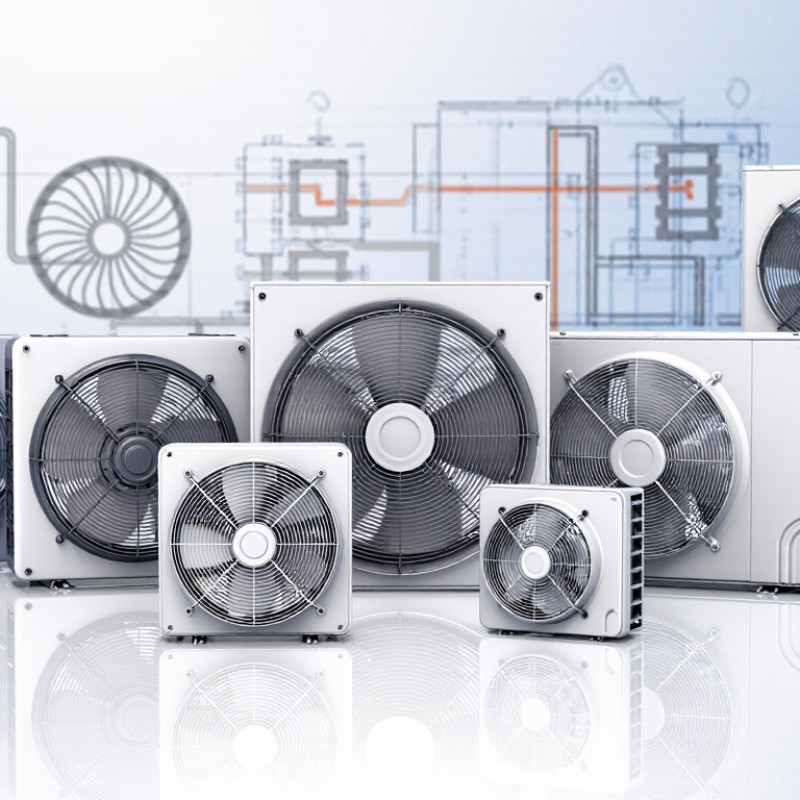
Seven useful options include fixed-speed axial, direct-drive, electronically commutated motor, variable-speed, swept-blade low-noise, corrosion-resistant, and matched replacement-assembly designs. They are not interchangeable upgrades. A variable-speed fan can reduce unnecessary airflow at part load, while a fixed-speed model may suit simpler systems. Swept blades can help manage sound near patios or bedroom windows. Corrosion-resistant materials matter in damp or coastal conditions. Small details count.
Tips Check the unit’s voltage, rotation, diameter, mounting pattern, and rated airflow before replacing a fan. Compare sound and power data at similar operating conditions. A quieter fan is not automatically a better match; incorrect airflow can affect heat rejection and system performance.
The International Energy Agency’s 2018 report, The Future of Cooling, projects global energy demand for space cooling to more than triple by 2050. That outlook makes efficient operation increasingly relevant, but it does not prove one fan style is best for every system. AHRI Standard 210/240 rates complete unitary air conditioners and heat pumps under defined conditions; it is not a standalone ranking of condenser fans. Use the equipment maker’s specifications and qualified service guidance, then compare verified fan performance. One awkward reality: published ratings may not reflect a dirty coil, blocked airflow, or a hot afternoon on site.

Comparing Fan Types, Features, and Applications

Condenser fans differ in airflow, controls, noise, and installation needs. Fixed-speed propeller fans suit many standard residential units. Swept-blade axial designs can reduce tonal noise, while direct-drive motors avoid belt maintenance. Belt-driven models offer service flexibility on larger equipment, but need periodic belt checks. Two-speed and variable-speed ECM configurations adjust airflow as conditions change. Low-profile fans help where clearance is tight. Centrifugal designs may suit specialized ducted or constrained installations, though they are less common outdoors.

Application matters more than the label. Check the equipment’s required airflow, coil resistance, motor ratings, and permitted fan direction before replacing a fan. A mismatch can reduce heat rejection, raise operating pressure, or cause overheating. The U.S. Energy Information Administration’s 2020 Residential Energy Consumption Survey attributed about 9% of household energy use to air conditioning. That figure covers the whole cooling system, not the condenser fan alone. Still, it shows why small efficiency gains deserve careful measurement.

Tips: Match the replacement to the unit’s specifications, not just its diameter. Measure clearance and confirm blade pitch, voltage, and rotation. Fit matters. Also compare sound ratings and control compatibility. A quieter fan is not automatically more efficient, and field results can differ from catalog ratings. Check actual airflow and power draw after installation.

Installation, Maintenance, and Replacement Considerations

Selecting a condenser fan is only half the job; installation affects airflow, noise, and reliability. Before ordering, record voltage, phase, horsepower, rotation, frame size, shaft dimensions, and airflow direction from the unit label. A matching diameter is not enough. Verify blade pitch and motor speed, since incorrect rotation can reduce airflow and strain the system. Disconnect power and confirm it is off before servicing. Follow the equipment manual’s wiring and clearance instructions.

The U.S. Department of Energy’s Better Buildings program estimates that HVAC uses about 40% of energy in U.S. commercial buildings. That makes proper airflow and routine checks worth attention. ASHRAE Standard 180-2018 sets minimum inspection and maintenance requirements for commercial HVAC systems; use it alongside the specific equipment schedule. During service, inspect blades for dirt or damage, check fasteners and wiring, and listen for bearing noise. Record motor current and compare it with the nameplate rating.

For replacement, compare rated airflow, motor speed, input power, operating temperature, and electrical protection—not just price or physical fit. Check the capacitor rating and mounting arrangement against the unit documentation. A fan that fits may still be wrong. Previous repair notes can also be unreliable, so verify wiring before reconnecting it. Even a careful visual inspection may miss a worn bearing; unusual vibration deserves a closer check.