Top 5 Tips for Choosing the Right Condenser Motor?
When selecting a condenser motor, the decision can profoundly impact system performance. A 2022 report from the Motor and Drive Systems Market revealed that choosing the right motor could enhance energy efficiency by up to 30%. This statistic highlights the importance of informed decision-making in motor selection.
Condenser motors operate continuously, requiring careful consideration of factors like reliability and efficiency. Key metrics, such as RPM ratings and power consumption, play crucial roles in optimizing performance. However, many users often overlook specific attributes, leading to inefficiencies or premature failures.
The challenge lies not only in understanding technical specifications but also in aligning them with system requirements. Users frequently face confusion over various available models. This can lead to errors in choice and suboptimal outcomes. By evaluating unique needs and industry standards, decision-makers can avoid common pitfalls and select the best condenser motor for their applications.

Understanding the Importance of Choosing the Right Condenser Motor
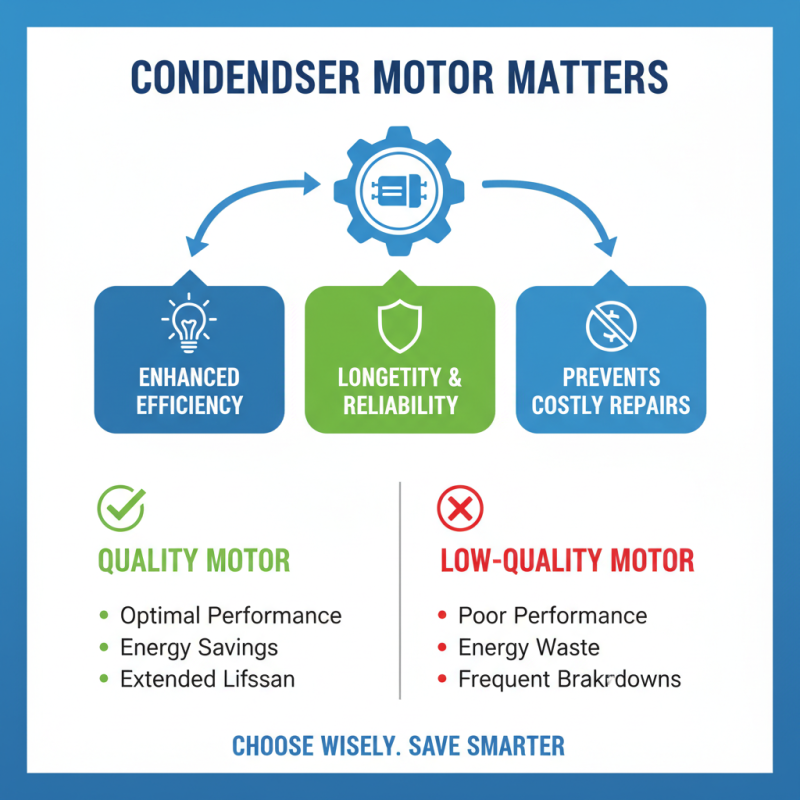
Choosing the right condenser motor is vital for optimal performance. A quality motor enhances your system's efficiency. Understanding its significance can prevent costly repairs and energy waste. Quality motors ensure longevity and reliability, but low-quality options can lead to breakdowns.
Installation is another critical aspect. A suitable motor matches your system's specifications. Incorrect sizing can cause overheating or inadequate cooling. Even minor mismatches can lead to inefficiencies. Your system deserves careful attention during this process. Sometimes, compromise on features or specifications may lead to unexpected results.
Additionally, consider the environment where the motor will operate. Factors like humidity and temperature greatly influence motor longevity. Many overlook compatibility, which can hinder performance. So, deeper research is essential. Exploring various types and materials can also offer better solutions. Keep performance, efficiency, and reliability in mind as you navigate your options.
Identifying Key Specifications for Your Application Needs
When selecting the right condenser motor, understanding the core specifications is vital. You must consider the voltage required by your application. A mismatch can lead to ineffective performance or even damage. Motors typically come in various voltage ratings, so choose one that aligns with your system’s needs.
Another essential specification is horsepower. This determines the motor’s power output. Too little horsepower can result in inadequate airflow or cooling efficiency. However, selecting a motor with excessive horsepower can increase energy costs unnecessarily. Also, pay attention to the RPM. The revolutions per minute must match your equipment to maintain proper operation.
Bearings and frame size are additional factors. The right bearings reduce friction and wear. Ensure frame size fits your existing setup. An ill-fitted motor can cause alignment issues. Check for heat dissipation capabilities as well. Overheating can lead to premature failure, making this a critical consideration. Balancing these specifications will help ensure that the condenser motor performs reliably in your unique application.
Top 5 Tips for Choosing the Right Condenser Motor
| Specification |
Description |
Importance |
| Voltage Rating |
The voltage at which the motor operates (e.g., 115V, 230V). |
Ensures compatibility with existing electrical systems. |
| Horsepower (HP) |
The power output of the motor, commonly rated in HP. |
Determines the capacity for heavy-duty applications. |
| Frame Size |
The physical dimensions of the motor's mounting frame. |
Affects installation and fit in existing equipment. |
| Speed (RPM) |
The rotational speed of the motor, measured in revolutions per minute. |
Critical for optimizing system performance and efficiency. |
| Starting Method |
The type of starting mechanism (e.g., direct, capacitor start). |
Influences power consumption and startup torque. |
Evaluating Energy Efficiency and Performance Ratings
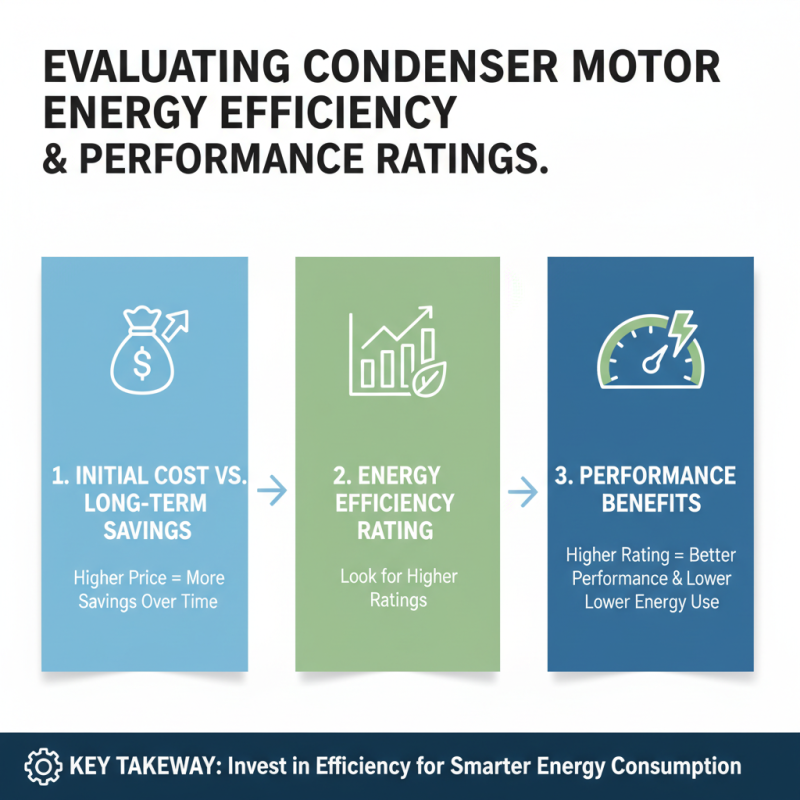
When selecting a condenser motor, energy efficiency and performance ratings are crucial factors. Efficient motors usually have a higher initial price, but they save money in the long run. Check the motor's energy efficiency rating. Higher ratings indicate better performance and lower energy consumption.
Consider the specific performance requirements of your application. Different motors have varied power outputs and speeds. Match these specifications to your needs. A motor that is too powerful may waste energy, while an underpowered motor could lead to poor performance.
A tip to enhance your selection process is to look for additional certifications. Energy Star and similar certifications offer credibility regarding efficiency standards. Choosing a certified motor might require extra research, but it pays off.
Moreover, review energy consumption over time, not just initial costs. An energy-efficient motor might require a larger upfront payment. Yet, lower operating costs will yield long-term savings, reducing the need for frequent replacements. Balancing these factors is key to making an informed decision.
Considering Manufacturer Reputation and Warranty Options
When selecting a condenser motor, manufacturer reputation plays a crucial role. A reliable brand often indicates a history of quality products. According to a recent market study, nearly 70% of buyers consider brand trustworthiness essential for their purchase decisions. This is not just about recognition but also about proven performance and durability.
Warranties are equally important. The typical warranty period ranges from one to five years. A longer warranty often signals a manufacturer's confidence in their product. Data shows that motors with extended warranties see a reduced return rate by about 30%. However, it's important to read the warranty fine print. Many warranties come with specific conditions, which might lead to invalid claims if not followed carefully.
Evaluate both aspects with care. Industry feedback suggests that even reputable brands can have flawed products. Research user reviews and conduct some independent analysis. Sometimes, a popular brand might not suit your specific needs. Balancing reputation with warranty options helps ensure you're making a well-informed decision in a competitive market.
Budgeting for Quality: Balancing Cost and Reliability in Selection
When choosing a condenser motor, budgeting for quality is crucial. A balance between cost and reliability can save money in the long run. According to industry reports, the average lifespan of a condenser motor ranges from 10 to 15 years. Investing in a quality motor may prevent premature failures. Cheaper options might tempt you, but they often lead to higher maintenance costs.
Tip: Research the average upfront costs versus long-term savings. High-quality motors typically incur lower energy costs and reduced repairs. Data shows that energy-efficient motors can save users up to 25% on electricity bills. A reliable motor also ensures consistent performance, which is essential for your equipment's longevity.
Remember, not all manufacturers are created equal. Some claim high standards but lack comprehensive testing. Look for motors that have been certified by recognized organizations. This certification often indicates a commitment to quality and reliability. Keep in mind that the initial investment might seem steep, but the right choice can enhance efficiency and reduce future expenses.
Top 5 Tips for Choosing the Right Condenser Motor
This chart illustrates the importance level of various criteria when selecting a condenser motor. Factors such as quality and energy efficiency are prioritized, while noise level is rated lower, highlighting the need for balance in budgeting and performance consideration.



 Email
Email Whatsapp
 WeChat