Leave Your Message

Best China Heat Pump Condenser Fan Motor Suppliers?

Choosing the Best China Heat Pump Condenser Fan Motor Suppliers requires more than comparing prices and catalog photographs. The motor sits behind the outdoor grille, exposed to rain, dust, vibration, and repeated winter defrost cycles. A weak bearing can turn a quiet heat pump into a sharp, irregular rattle. Supplier evaluation should therefore examine torque curves, insulation class, IP rating, corrosion protection, efficiency, noise, warranty terms, and documented production controls.

The market is expanding quickly. The International Energy Agency reported that global heat pump sales increased by 11% in 2022, while European sales nearly doubled. Its report, The Future of Heat Pumps, identifies heat pumps as important technologies for cleaner and more secure heating. Fatih Birol, IEA Executive Director, stated, “Heat pumps are an indispensable part of the transition to secure and sustainable heating.” This growth increases demand for reliable Heat Pump Condenser Fan Motor manufacturers, especially those supporting variable-speed systems and low-temperature operation.

Still, market data does not guarantee factory quality. A supplier may show an impressive efficiency figure, yet provide limited test evidence. That gap matters. The strongest shortlist should include audited factories, traceable components, sample testing, and customer references from comparable climates. Buyers should also request thermal-rise records and locked-rotor test results, not only marketing claims. This guide will compare leading China suppliers through engineering capability, compliance, customization, delivery reliability, and after-sales support. Some rankings may remain imperfect. Real field failure data is often private, incomplete, or difficult to verify.

Best China Heat Pump Condenser Fan Motor Suppliers?

What Is a Heat Pump Condenser Fan Motor?

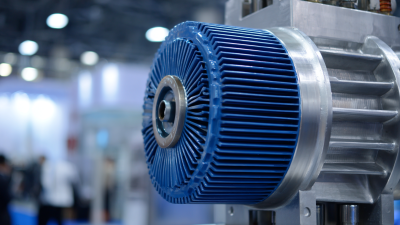
A heat pump condenser fan motor drives the outdoor fan that moves air across the condenser coil. This airflow releases heat during cooling and absorbs heat during heating. Without steady airflow, refrigerant pressure can rise, efficiency can fall, and the compressor may suffer unnecessary stress.

The motor usually includes a sealed housing, bearings, windings, and an electrical connection. Some models use permanent-split capacitor designs, while others use electronically commutated technology. The correct motor must match voltage, rotation, shaft size, mounting pattern, speed, and operating temperature. Small differences matter. A motor with the wrong rotation can push air away from the coil.

Field experience shows that noise is not always a motor failure. Dirt on the fan blade, loose brackets, worn bearings, or restricted airflow can create similar symptoms. A technician should check the capacitor, wiring, amp draw, and blade balance before replacing parts. Power must be disconnected before inspection.

Weather exposure makes durability important. Moisture-resistant insulation, protected bearings, and stable performance during cold starts improve service life. Still, no motor is maintenance-free. Dust buildup and corrosion can shorten its working period, especially near coastal areas. Selecting a condenser fan motor from a capable supplier requires more than comparing price. Test records, dimensional accuracy, electrical data, and replacement support deserve careful review. Mistakes happen, even during experienced installation. Recording the original motor data can prevent repeat errors.

How to Identify the Right Motor Specifications

Choosing the best China heat pump condenser fan motor supplier starts with precise specifications, not price. A motor that looks compatible may still fail in a hot outdoor unit.

Check the nameplate voltage, frequency, phase, rated current, and power output. Confirm the running speed and rotation direction. A clockwise motor may not deliver correct airflow when installed counterclockwise. Measure the shaft diameter, shaft length, mounting-hole spacing, and overall body size. These details often cause installation delays. Small differences matter.

Ask the supplier for a complete datasheet and a clear motor drawing. Verify the capacitor rating, bearing type, insulation class, and enclosure protection level. For coastal or dusty locations, corrosion resistance and suitable IP protection deserve closer attention. Check the operating temperature range, duty cycle, and expected airflow under load. Do not rely on a product photo.

A practical test should compare current draw, noise, vibration, and temperature rise after continuous operation. Request sample units before placing a large order. One common mistake is matching wattage while ignoring torque and airflow. I have seen apparently correct motors run smoothly but move insufficient air. Recheck every dimension against the original unit, because supplier descriptions can be incomplete or slightly inconsistent. Clear communication and documented test results make supplier evaluation more dependable.

How to Identify the Right Condenser Fan Motor Specifications

For 60 Hz induction motors, pole count is a useful first check when matching a replacement condenser fan motor. The chart shows theoretical synchronous speed; actual rated speed is slightly lower because of motor slip. Always confirm voltage, frequency, horsepower, rotation, mounting pattern, shaft dimensions, capacitor requirements, and environmental ratings on the equipment and motor nameplates.

Key Criteria for Evaluating Chinese Suppliers

Best China Heat Pump Condenser Fan Motor Suppliers?

Choosing Chinese suppliers requires more than comparing unit prices. The International Energy Agency reported that global heat pump sales grew by 11% in 2022. Europe recorded growth of almost 40% that year. This expansion increases pressure on motor reliability, delivery capacity, and documentation.

Start with technical fit. Request rated voltage, frequency, speed, torque, airflow, noise, and power-consumption data. Confirm IP protection, insulation class, thermal protection, bearing design, and operating temperature. For outdoor units, ask for corrosion testing and low-temperature startup results. A supplier should provide test reports from calibrated equipment, not only a polished product sheet. Check whether samples match mass-production drawings.

Ask for evidence.

Quality systems matter, but certificates alone are insufficient. Review incoming-material records, winding inspection, rotor balancing, final-run testing, and traceability codes. ISO 9001 certification can support process control, while IEC 60034 test methods help compare motor performance consistently. The U.S. Department of Energy notes that efficient motors can reduce lifetime operating costs, so evaluate watts per delivered airflow, not purchase price alone.

A practical audit should include three production samples and one destructive inspection. Compare vibration, current rise, and noise after continuous operation. One imperfect assumption deserves attention: a higher-efficiency motor may not suit every control board or fan blade. Ask for compatibility data. Also inspect warranty exclusions, spare-part availability, and corrective-action response times. A supplier that answers slowly before the order may respond even slower after installation.

Manufacturing Quality, Certifications, and Testing Standards

Best China Heat Pump Condenser Fan Motor Suppliers?

Manufacturing quality begins with controlled materials and repeatable assembly. Ask suppliers for copper wire specifications, bearing grades, insulation systems, and rotor balance records. A reliable factory should trace each motor from incoming inspection to final packaging. Production workers must check winding resistance, current draw, rotation direction, and abnormal noise. Small defects become serious during winter operation.

Certifications need careful verification. ISO 9001 shows a managed quality system, but it does not guarantee every motor performs well. Product documents may include CE, RoHS, UL, or applicable IEC test evidence. Confirm the certificate holder, factory address, model range, and expiry date. Testing should cover rated voltage, locked-rotor protection, temperature rise, insulation strength, endurance, vibration, noise, and water or dust resistance. The exact test method matters. A vague report is weak evidence.

Tips:
Request samples from different production lots. Compare current, speed, sound, and temperature after continuous operation. Ask for raw test data, not only pass certificates. A factory audit can reveal calibration gaps, crowded workstations, or poorly protected bearings. These details are easy to miss. One practical mistake is trusting a beautiful report without checking the tested model. Suppliers should also explain failure handling, corrective actions, and replacement procedures. No process is perfect, so honest records of defects often indicate stronger quality control.

Best China Heat Pump Condenser Fan Motor Suppliers? - Manufacturing Quality, Certifications, and Testing Standards
Evaluation Dimension What a Qualified Supplier Should Demonstrate Relevant Certifications and Standards Recommended Documents or Test Evidence
Quality Management A documented quality system covering incoming materials, process control, final inspection, nonconforming-product handling, corrective actions, and traceability. ISO 9001:2015 quality management system certification. Certification should be issued by an accredited certification body and remain within its validity period. Valid certificate, scope of certification, audit records, process flow chart, control plan, inspection records, and corrective-action reports.
Motor Design and Application Fit The motor should be matched to the condenser-fan duty, including rated voltage, frequency, phase, speed, torque, rotation direction, mounting dimensions, shaft size, ambient temperature, and operating cycle. IEC 60034-1 for rotating electrical machines. Applicable national or regional requirements should also be confirmed for the destination market. Approved motor datasheet, dimensional drawing, wiring diagram, performance curve, nameplate specification, and application approval record.
Electrical Safety Production units should be checked for insulation integrity, dielectric strength, winding resistance, grounding continuity where applicable, and protection against abnormal electrical conditions. IEC 60335-1 provides general safety requirements for household and similar electrical appliances. IEC 60335-2-40 is relevant to electrical heat pumps and air-conditioners when the complete equipment falls within its scope. Routine electrical test records, hipot test voltage and duration, insulation-resistance results, winding-resistance limits, and sample safety-test reports.
Ingress Protection and Environmental Resistance The enclosure, terminal area, bearings, coatings, and seals should be suitable for outdoor exposure, moisture, dust, temperature variation, and the specified installation environment. IEC 60529 for IP enclosure ratings. Environmental and corrosion tests should be selected according to the installation location and customer specification. IP-rating test report, material and coating specifications, humidity or water-exposure results, corrosion test data where required, and declared operating-temperature range.
Performance Testing Testing should confirm rated speed, input power, current, torque or airflow performance, rotation direction, starting capability, and stable operation at specified voltage and frequency. IEC 60034-1 can support motor rating and performance verification. Test methods should be defined in the supplier’s approved product specification. Type-test report, production end-of-line test record, calibrated test-equipment list, test limits, sampling plan, and representative performance curves.
Thermal and Endurance Reliability The motor should withstand continuous or intermittent operation under the defined load, ambient temperature, voltage variation, and thermal conditions without unacceptable winding, bearing, or insulation degradation. IEC 60034-1 provides general requirements related to ratings and temperature rise. Endurance conditions should be agreed in the customer’s validation plan. Temperature-rise report, endurance-cycle results, bearing-life information, thermal-protection specification, post-test insulation checks, and failure-analysis records.
Noise and Vibration Control Manufacturing controls should address rotor balance, bearing fit, fan-motor alignment, shaft runout, electromagnetic noise, and abnormal vibration during operation. ISO 21940 series is used for rotor balancing principles. Noise and vibration limits should be stated in the purchase specification because acceptable values depend on the heat-pump assembly. Balancing records, vibration measurements, noise test method, maximum limits, bearing inspection records, and assembled-unit validation results.
Electromagnetic Compatibility Electronic commutation, variable-speed controls, or integrated motor electronics should be evaluated for conducted and radiated emissions and immunity in the complete equipment configuration. IEC 61000-6-1 and IEC 61000-6-3 may be relevant for residential, commercial, or light-industrial environments, subject to the final product and applicable regional regulations. EMC test report from a competent laboratory, wiring and grounding instructions, conducted-emission results, radiated-emission results, and immunity test results where applicable.
Materials and Regulatory Compliance Materials should be controlled for insulation class, temperature rating, flame performance where required, restricted substances, magnet or metal composition, and supply-chain consistency. RoHS Directive 2011/65/EU, including applicable amendments, is relevant for restricted substances in electrical and electronic equipment. REACH obligations may also apply to substances and articles placed on the European market. Material declarations, supplier declarations of conformity, restricted-substance test reports, insulation-system details, and change-control records.
Production Process Control Critical operations such as stator winding, insulation insertion, varnishing, rotor assembly, bearing installation, balancing, terminal connection, and final assembly should have defined control points. ISO 9001:2015 supports process control and traceability. Automotive-style tools such as PFMEA, control plans, and statistical process control may be useful for higher-volume programs. Process flow chart, PFMEA, control plan, work instructions, first-article inspection, in-process inspection data, gauge-calibration records, and lot traceability.
Supplier and Component Control Bearings, capacitors, thermal protectors, insulation materials, magnets, connectors, and stamped parts should be sourced from approved suppliers with incoming inspection requirements. ISO 9001:2015 requirements for externally provided processes, products, and services. Component-specific standards may apply depending on the part and destination market. Approved-vendor list, incoming inspection standards, component certificates, batch records, supplier audits, and documented substitution-approval procedures.
Change Management and Traceability Any change to materials, tooling, production location, components, firmware, winding design, or process parameters should be reviewed and approved before shipment. ISO 9001:2015 change-control and traceability principles. Customer-specific change-notification requirements should be included in the supply agreement. Engineering-change notices, revision-controlled drawings, lot or date-code records, retained samples, deviation approvals, and customer notification records.
Factory and Laboratory Capability The supplier should have calibrated equipment and competent personnel for electrical, dimensional, thermal, noise, vibration, and endurance testing, either internally or through qualified laboratories. ISO/IEC 17025 is the recognized standard for the competence of testing and calibration laboratories. It is most relevant when third-party laboratory results are used for compliance or validation. Calibration certificates, laboratory accreditation scope, equipment-maintenance records, technician training records, test-method specifications, and raw test data.
Packaging and Delivery Quality Packaging should protect shafts, connectors, bearings, coatings, and terminal components from impact, moisture, contamination, and deformation during storage and international transport. Packaging requirements should be defined by product geometry, transport route, storage conditions, and customer handling procedures. Export packaging should also comply with applicable wood-packaging rules when wooden materials are used. Packaging specification, drop or transport evaluation where required, moisture-protection method, palletization drawing, labeling format, inspection checklist, and shipment quality records.
Practical selection note: Standards and certifications should be verified against the exact motor construction, final heat-pump system, destination market, and intended application. A certificate alone does not replace product-specific performance, safety, endurance, and production-lot testing.

How to Compare Prices, Services, and Delivery Options

Comparing China heat pump condenser fan motor suppliers starts with the real delivered cost, not the unit price. A cheaper motor may exclude testing, export packing, spare capacitors, or replacement coverage. IEA’s The Future of Heat Pumps reports that global heat pump sales increased by 11% in 2022. Demand is growing, but quality differences remain significant. Request a matched quotation for voltage, frequency, shaft size, rotation, insulation class, IP rating, bearings, and operating temperature.

Ask suppliers to separate EXW, FOB, CIF, and door-delivery prices. Check minimum order quantity and sample charges. A reliable quotation should show production time, inspection standards, warranty terms, and the remedy for early failures. Request test records for vibration, noise, current draw, and temperature rise. Keep one sample for independent testing. It costs less than discovering a mismatch during installation.

Delivery deserves equal attention. Confirm whether parts ship by courier, air freight, or sea freight, then compare total landed cost and customs documentation. UNCTAD’s Review of Maritime Transport highlights continuing volatility in shipping conditions, so an old freight estimate may be misleading. Ask for two delivery plans: standard production and urgent replacement. Ten to twenty days may be realistic for stocked models, but custom shafts or unusual voltages can extend production. Suppliers sometimes promise too much. That is a warning, not a benefit. A small pilot order can reveal packaging weaknesses, communication delays, and inconsistent motor labels before larger purchasing commitments.