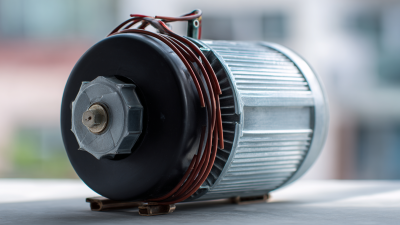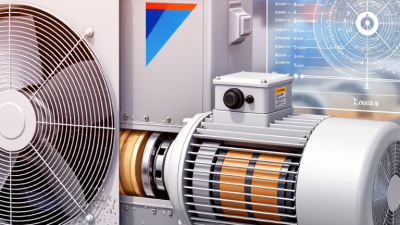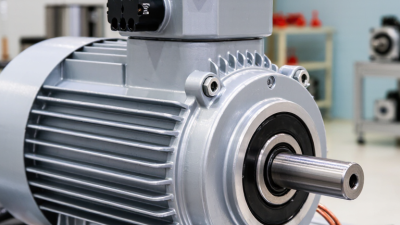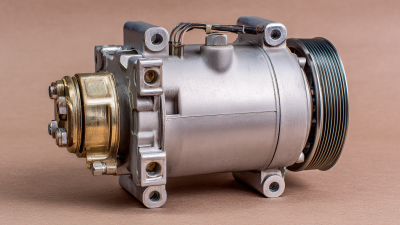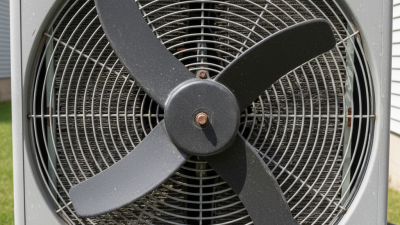


Choosing the 2026 best condenser fan motor for an HVAC system starts with fit, not a flashy product claim. The Condenser Fan Motor helps move outdoor air across the coil, carrying heat away from the refrigerant. If it runs too slowly, draws the wrong current, or turns in the wrong direction, cooling performance can suffer. Small details matter.
A useful comparison checks the unit’s nameplate and service documentation against each motor’s voltage, horsepower, RPM, rotation, frame, shaft dimensions, and capacitor requirements. Also consider the outdoor environment. A motor exposed to rain, dust, vibration, and summer heat needs suitable protection and a temperature rating that matches its application. Listen for bearing noise and watch for wobble; those clues may point to more than a motor problem.
There is no universal winner. Not quite. A variable-speed replacement may offer control in one system, while a correctly matched single-speed motor may be the sounder choice in another. Product availability and specifications can change, so confirm current manufacturer data rather than relying on an old listing or a near-match. A mismatch can cause poor airflow, excess electrical stress, or repeated service calls.
This guide compares practical features, compatibility checks, efficiency considerations, and installation factors to help narrow the choices. It cannot replace a technician’s diagnosis. If wiring, capacitor condition, or system compatibility is uncertain, have a qualified HVAC professional verify the replacement before power is restored. That step may feel cautious, but it is cheaper than guessing.
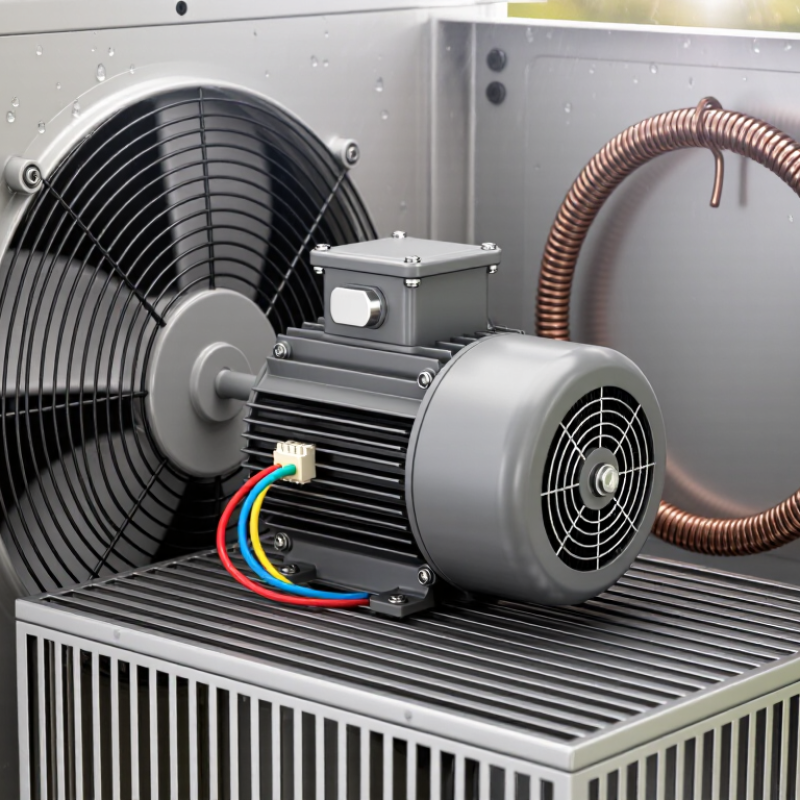
A condenser fan motor drives outdoor airflow across the condenser coil, carrying heat from the refrigerant into the surrounding air. That heat transfer lets refrigerant condense and return through the system. On a hot afternoon, weak airflow can raise condensing pressure and make the compressor work harder. The motor is small. Its effect is not.
The U.S. Department of Energy’s 2017 report, Energy Savings Potential and R&D Opportunities for Commercial Building HVAC Systems, estimates that HVAC uses about 40% of commercial-building energy. That figure covers whole HVAC systems, not condenser fan motors alone, but it shows why component performance matters. A correctly matched motor, fan blade, and control setting help maintain airflow without unnecessary electrical draw. Dirt, bent fins, tight clearances, or the wrong rotation can undermine that match. Real-world conditions are messier than a rating sheet.
For equipment comparisons, AHRI Standard 210/240-2023 provides standardized performance ratings for unitary air conditioners and heat pumps. These ratings describe complete equipment, rather than isolating condenser-motor efficiency. Check the motor’s voltage, speed, rotation, mounting, and control compatibility against the unit’s specifications. A higher-efficiency motor is not automatically the right replacement. It may need a compatible blade and control. Small details count.

An 825-RPM or 1,075-RPM rating describes shaft speed, not whether a condenser fan motor is PSC or ECM. Both speeds appear in HVAC equipment, and the correct replacement must match the unit’s specifications, including voltage, rotation, mounting, and capacitor requirements. PSC motors use a run capacitor and typically operate at selected fixed speeds. ECM motors use electronic controls; some offer variable-speed operation, but not every ECM condenser motor does. Check the nameplate. Speed alone is not enough.
The U.S. Department of Energy’s Improving Fan System Performance: A Sourcebook for Industry (2003) explains the fan affinity laws: under comparable conditions, fan power varies approximately with the cube of speed. As an illustration, 825 RPM versus 1,075 RPM gives roughly 45% of the power at the higher speed—but only for a comparable fan and operating setup. That is not a guaranteed motor-energy saving. In the field, a mismatched replacement can cause weak airflow, overheating, or noisy operation. One awkward truth: “more efficient” does not mean compatible. Confirm the manufacturer’s motor data and control requirements before choosing PSC or ECM, and verify operation after installation.
2026 Best Condenser Fan Motor for HVAC Systems
Reading Motor Nameplates: Voltage, HP, RPM, Phase, and Rotation
A motor nameplate is a compact checklist, not just a label. Match its voltage to the equipment’s specified supply, and confirm the phase matches the system. A mismatch can prevent startup or cause overheating. Check horsepower (HP) against the unit’s requirements; more power is not automatically better. RPM affects airflow and operating load, so choose the specified speed rather than guessing from appearance. Small details matter.
Rotation markings can be easy to misread. CW and CCW describe direction from a stated viewing position, often the shaft end. Check the motor diagram and equipment instructions before wiring, since some motors allow rotation changes and others do not. I have seen a correct-looking replacement fail because the viewing direction was assumed. That detail deserves a second look. When nameplate information is missing or unclear, confirm compatibility with the equipment documentation or a qualified HVAC technician.
Tips: Photograph the old nameplate before removal. Compare voltage, HP, RPM, phase, and rotation side by side. Also check the wiring diagram and mounting details; matching the main numbers alone may not ensure a suitable replacement. Turn off power before inspection.
Reading Motor Nameplates: Voltage, HP, RPM, Phase, and Rotation
Representative condenser-fan motor examples compare horsepower ratings; hover over a bar for typical nameplate details. Voltage, speed, phase, and rotation vary by motor, so always check the actual nameplate and equipment requirements before selecting a replacement.
DOE’s 2023 standards place many split-system air conditioners within a 13.4–14.3 SEER2 minimum range. The exact threshold depends on region and equipment capacity, so verify the applicable DOE category before comparing units. DOE’s residential central air-conditioner test procedure, Appendix M1, defines how SEER2 performance is measured. It uses updated test conditions, including higher external static pressure. That distinction matters. A condenser fan motor label alone cannot establish a system’s SEER2 rating.
For replacement work, match the motor’s horsepower, voltage, RPM, rotation, shaft dimensions, and capacitor requirements to the equipment specifications. Incorrect airflow can raise operating stress or impair heat rejection, even when the motor physically fits. AHRI Standard 210/240 provides the framework for rating unitary air-conditioning equipment; the rating applies to the tested system combination, not an isolated motor.
Not by itself.
A more efficient motor may help reduce its own electricity use, but it does not automatically move an older system above the DOE minimum. Check the unit data plate and service documentation, then confirm airflow and electrical readings after installation. Real installations can be imperfect: coil condition, wiring, and field adjustments all affect performance.
2026 Best Condenser Fan Motor for HVAC Systems
Choosing a Replacement: Match Frame, Shaft, Capacitor, and Duty Rating
A replacement condenser fan motor must fit the unit, not just look similar. Compare the frame size, mounting holes, shaft diameter, and shaft length with the original motor. A shaft that is even slightly too long can interfere with the blade or grille. Check the equipment label and motor plate before ordering. A common mistake is matching horsepower while overlooking mounting details.
Match the capacitor’s microfarad rating to the motor specifications; its voltage rating should meet or exceed the specified value. Do not assume the old capacitor is correct, especially if a previous repair changed it. Confirm the motor’s duty rating and allowable operating conditions, too. Outdoor units face heat, moisture, and long run times. The wrong rating may shorten service life, even when the motor starts normally.
Tips: Photograph the wiring before disconnecting anything, and label each lead. Shut off power at the disconnect and verify it is off. If the wiring diagram is missing or rotation is unclear, ask a qualified HVAC technician to confirm the connection. Small details matter. One overlooked wire can turn a simple replacement into a frustrating callback.
Common replacement configurations are shown for comparison. These are examples, not universal specifications. Confirm the original motor nameplate, equipment requirements, wiring diagram, and physical dimensions before selecting a replacement.
| Typical application | Example motor rating | Voltage / frequency | Frame and mounting | Shaft details to verify | Capacitor example | Duty and rotation |
|---|---|---|---|---|---|---|
| Residential split-system condenser | 1/6 HP, 825 RPM, single phase | 208–230 V, 60 Hz | Commonly 48Y; check belly-band or equipment-specific mounting | Often 1/2 in diameter; measure usable length, flat, and hub clearance | Example: 5 µF, 370 or 440 VAC; use the motor’s specified rating | Typically continuous-duty, air-over; confirm required rotation and airflow |
| Residential or light-commercial condenser | 1/4 HP, 1075 RPM, single phase | 208–230 V, 60 Hz | Commonly 48Y; verify mounting dimensions and bracket style | Often 1/2 in diameter; match shaft length, extension, and fan-hub fit | Example: 5–7.5 µF, 370 or 440 VAC; exact value is motor-specific | Typically continuous-duty, air-over; match rotation viewed from the specified end |
| Higher-capacity residential condenser | 1/3 HP, 1075 RPM, single phase | 208–230 V, 60 Hz | Commonly 48Y; confirm frame designation and mounting arrangement | Check diameter, length, shaft projection, and whether a flat is required | Example: 7.5–10 µF, 370 or 440 VAC; follow the nameplate | Typically continuous-duty, air-over; match rotation and fan blade requirements |
| Equipment requiring a different speed | Motor HP and RPM must match the equipment specification | Use the voltage and frequency listed on the original motor and equipment | Match the exact frame, mounting holes, and motor envelope | Measure shaft diameter and length; check end play and fan attachment | Use the specified capacitance and an equal or higher voltage rating; never guess | Match duty rating, rotation, airflow direction, and any required speed control |
Replacement checklist: Match horsepower, RPM, voltage, frequency, phase, frame, mounting, shaft dimensions, capacitor rating, rotation, and duty. A capacitor’s capacitance must match the motor specification; its voltage rating may be equal to or higher than specified. Disconnect power and follow the equipment manufacturer’s service instructions.