

Choosing reliable HVAC blower motor suppliers worldwide requires more than comparing catalog prices. A suitable Hvac Blower Motor must match voltage, horsepower, rotation, mounting style, airflow demand, and operating environment. These details affect comfort, energy use, noise, and service life. A motor that fits physically may still perform poorly in a commercial air handler. Small errors matter.
This guide examines suppliers through practical and professional criteria. It considers manufacturing experience, engineering support, product testing, certifications, warranty terms, replacement availability, and international logistics. Supplier reputation also deserves careful review. Clear datasheets, traceable quality controls, and responsive technical teams often reveal more than polished websites. Field experience matters here. Technicians notice vibration, bearing noise, difficult wiring, and weak startup performance before a brochure does. Ask for evidence.
No supplier is perfect. Published specifications can change, and regional support may vary. That limitation should remain visible. Buyers should confirm current documentation, compatibility, and local installation requirements before ordering. Samples or pilot units can reduce costly mistakes. Price still matters, but the cheapest motor may create higher maintenance costs later. Reliability has a real cost.
The following overview compares leading global suppliers and explains where each may fit. It supports informed decisions for contractors, distributors, facility managers, and equipment manufacturers. Use the rankings as guidance, not absolute truth. Local service conditions may tell a different story.
HVAC Blower Motors: Definition, Functions, and Main Applications
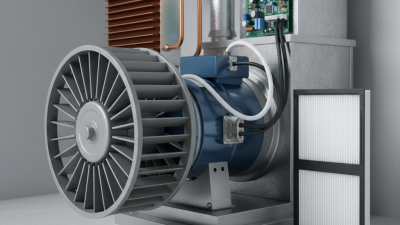
An HVAC blower motor powers the fan that moves air through a heating or cooling system. It draws return air across filters and coils, then pushes conditioned air through ducts or indoor vents. In furnaces, heat pumps, air conditioners, and rooftop units, this motor supports stable airflow and room comfort. Common designs include single-speed, multi-speed, and electronically commutated motors. Variable-speed models adjust output more precisely, although controls and installation quality still matter.
The U.S. Department of Energy reports that heating and cooling represent about 48% of household energy use. That figure explains why motor efficiency deserves attention. The International Energy Agency also projects that global space-cooling energy demand could more than triple by 2050 from 2016 levels. Efficient blower operation may reduce wasted electricity, but it cannot fix blocked filters or poor duct design. Field experience shows that a quiet motor can still deliver weak airflow. That is an easy detail to miss.
Tips: Match the motor’s voltage, horsepower, rotation, frame size, and airflow rating before replacement. Check static pressure, capacitor condition, bearings, and filter resistance. A technician should measure airflow rather than rely only on sound. Variable-speed equipment needs compatible controls. Otherwise, its efficiency claims may remain theoretical. Select suppliers that provide test data, traceable specifications, warranty terms, and documented quality procedures. The DOE figures are useful, but actual savings depend heavily on climate, building envelope, maintenance, and operating habits.
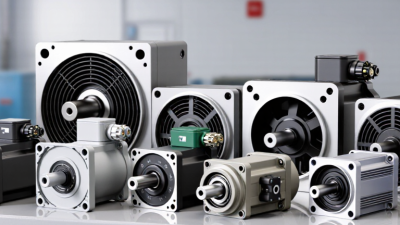
HVAC blower motors drive fans that circulate conditioned air through heating, ventilation, and air-conditioning systems. The chart compares representative nominal airflow capacities commonly associated with major equipment applications. Actual airflow depends on system size, static pressure, fan design, and operating conditions.
Evaluating global blower motor suppliers requires more than comparing unit prices. The International Energy Agency reports that buildings consume about 30% of global final energy. Therefore, motor efficiency, control accuracy, and service life deserve serious attention. Ask suppliers for measured data, not general claims. Useful documents include efficiency curves, noise readings, thermal limits, and endurance-test results. A motor that saves energy at one speed may perform poorly under variable airflow.
Quality systems also reveal supplier reliability. Request production traceability, incoming-material controls, and failure-analysis records. Independent testing should confirm insulation strength, vibration resistance, ingress protection, and electromagnetic compatibility. The U.S. Department of Energy emphasizes that fan-system performance depends on the complete system, not only the motor. This makes shaft matching, controller compatibility, and installation guidance important evaluation points. Small details matter.
Supply continuity needs equal scrutiny. Review capacity by factory, lead-time history, spare-part policies, and contingency plans for electronics shortages. The 2023 IEA Energy Efficiency report also highlights the value of efficient equipment during volatile energy markets. However, supplier questionnaires can look impressive while factory execution remains uneven. I have seen specifications pass review, then fail during hot-room testing. That is uncomfortable, but useful. Require sample testing, witnessed audits, and field references from comparable climates before approving a long-term source. Pricing should follow verified performance, not replace it.
HVAC blower motor suppliers vary widely by region and product range. North American suppliers often focus on replacement motors for furnaces, air handlers, rooftop units, and residential heat pumps. Their catalogs usually include PSC, ECM, and variable-speed models, with common voltage options from 115 to 460 volts. Stock availability matters here. A contractor replacing a failed motor during winter cannot wait several weeks.
European suppliers commonly emphasize compact designs, energy efficiency, and motors for heat recovery ventilation systems. Many offer electronically commutated motors, low-noise assemblies, and customized mounting plates. East Asian manufacturers often provide broader production capacity, including shaded-pole motors, BLDC units, condenser fan motors, and integrated control systems. South Asian suppliers may be competitive for standard motors and custom winding work, while regional distributors support faster delivery.
Buyers should examine more than price. Ask for airflow curves, operating temperature limits, insulation class, bearing specifications, and endurance test data. A reliable supplier can explain how a motor performs under dust, humidity, and frequent cycling. Sample testing is useful. It can expose vibration that a catalog never shows. Certification documents, traceable production records, and responsive technical support also indicate stronger quality control.
The selection process is not perfectly predictable. A low-noise motor may deliver less starting torque, while a highly efficient model may require compatible controls. Some suppliers publish impressive figures but provide limited test conditions. That gap deserves careful questioning before bulk purchasing.
Top HVAC Blower Motor Suppliers Worldwide?
Reliable suppliers distinguish themselves through manufacturing discipline, not attractive catalogs. Their facilities should follow recognized quality systems, such as ISO 9001, while meeting applicable electrical safety and efficiency requirements. Documentation must cover materials, winding insulation, bearings, connectors, and production changes. A missing revision record can create serious field problems.
Modern suppliers increasingly produce electronically commutated motors with efficient speed control. Sensorless control reduces component count, while integrated thermal protection helps prevent overheating. Some designs use permanent magnet rotors and precise pulse-width modulation. These technologies can lower energy use during partial-load operation. However, efficiency claims require real testing under defined airflow, pressure, voltage, and temperature conditions.
Quality control begins with incoming material checks. It continues through winding resistance tests, insulation testing, rotor balance inspection, noise measurement, and end-of-line performance testing. Samples should undergo thermal cycling, vibration testing, and extended running tests. Traceability matters. Each motor should connect to a production batch and test record. A clean report is not enough. Suppliers should explain failures openly and show corrective actions. No factory is perfect. The stronger ones learn from small defects before customers discover them. Audits, calibrated instruments, trained technicians, and repeatable procedures provide more confidence than a single impressive sample.
| Supplier Category | Typical HVAC Applications | Motor Technologies | Common Standards | Typical Power Range | Efficiency and Control Options | Manufacturing and Quality Controls | Best-Fit Purchasing Criteria |
|---|---|---|---|---|---|---|---|
| Global OEM-Grade Suppliers | Residential and commercial air handlers, furnaces, rooftop units, fan-coil units, and packaged HVAC systems | Electronically commutated motors, permanent-magnet motors, variable-speed induction motors, and shaded-pole motors | ISO 9001 quality systems; IEC 60335-1; IEC 60335-2-40; applicable UL and CSA requirements; RoHS and REACH compliance where required | Approximately 50 W to 5 kW, depending on blower size and system design | High-efficiency operation, PWM or 0–10 V control, integrated speed regulation, soft start, locked-rotor protection, and fault feedback | Automated winding inspection, rotor balancing, hipot testing, insulation-resistance testing, vibration testing, endurance testing, and end-of-line electrical verification | Best for high-volume programs requiring documented process capability, stable revisions, traceability, and long-term engineering support |
| Commercial HVAC Motor Specialists | Commercial air-conditioning units, ventilation systems, make-up air units, fan-coil systems, and air-handling equipment | EC blower motors, three-phase induction motors, external-rotor motors, and direct-drive motor-fan assemblies | IEC 60034 series, IEC 60335-1, IEC 60529 ingress-protection ratings, ISO 9001, and regional electrical safety approvals | Approximately 200 W to 15 kW for direct-drive and belt-drive air-moving equipment | Variable-frequency-drive compatibility, speed feedback, high operating efficiency, programmable airflow control, and optional integrated electronics | Dimensional inspection, dynamic balancing, temperature-rise testing, acoustic measurement, vibration limits, bearing checks, and thermal overload verification | Best for commercial projects where airflow stability, low noise, serviceability, and continuous-duty performance are priorities |
| Residential Replacement-Market Suppliers | Residential furnaces, split-system air handlers, fan-coil units, heat pumps, and replacement blower assemblies | Multi-speed permanent-split-capacitor motors, universal replacement motors, and electronically commutated replacement motors | Applicable national electrical codes, IEC or NEMA motor requirements, safety certification for the target market, and RoHS requirements where applicable | Approximately 100 W to 1.5 kW, with common residential ratings below 1 kW | Selectable speed taps, fixed-speed operation, ECM speed control, reverse rotation options, and replaceable control modules on selected designs | Incoming component inspection, winding resistance checks, no-load current testing, rotation testing, noise checks, capacitor verification, and packaging inspection | Best for compatibility, quick availability, standardized mounting dimensions, replacement interchangeability, and service-network support |
| Customized OEM and Contract Manufacturers | Private-label HVAC equipment, new product development, specialized air-moving systems, and low-to-medium volume programs | Application-specific EC motors, custom stator and rotor designs, integrated blower modules, and customized control interfaces | Customer-defined specifications supported by ISO 9001, IEC 60335, IEC 60034, IEC 60529, EMC requirements, and market-specific certification | Approximately 30 W to 10 kW, subject to thermal, mechanical, and airflow requirements | Custom speed curves, communication interfaces, sensor integration, automatic restart, current limiting, and application-specific firmware | Design verification testing, prototype validation, failure-mode analysis, first-article inspection, process audits, control-plan compliance, and full production traceability | Best for products requiring unique dimensions, special connectors, customized airflow performance, or coordinated mechanical and electrical development |
| Energy-Efficiency-Focused Suppliers | High-efficiency air handlers, heat pumps, variable-air-volume systems, energy-recovery units, and smart-building HVAC equipment | Permanent-magnet synchronous motors, electronically commutated motors, sensorless control systems, and integrated inverter drives | IEC 60034 efficiency methods, applicable regional energy-efficiency regulations, ISO 9001, EMC standards, and environmental substance restrictions | Approximately 100 W to 8 kW for common HVAC blower and fan applications | High part-load efficiency, closed-loop airflow control, demand-based ventilation compatibility, low standby consumption, and digital diagnostics | Efficiency mapping across operating points, thermal cycling, EMC testing, acoustic testing, firmware validation, bearing-life assessment, and energy-consumption verification | Best for reducing lifecycle energy use, meeting efficiency regulations, lowering operating costs, and integrating with building-management systems |
| Harsh-Environment Application Suppliers | Outdoor condensing equipment, industrial HVAC, coastal installations, refrigerated spaces, and high-dust or high-humidity environments | Sealed EC motors, corrosion-resistant motor assemblies, coated windings, external-rotor motors, and protected control electronics | IEC 60529 IP ratings, IEC 60034, IEC 60335 where applicable, corrosion-resistance requirements, EMC standards, and regional safety approvals | Approximately 100 W to 12 kW, depending on airflow, static pressure, and environmental exposure | Variable-speed control, overload protection, moisture-resistant construction, corrosion protection, and temperature monitoring | Humidity exposure, salt-spray or corrosion testing where specified, ingress testing, insulation-resistance testing, thermal cycling, vibration testing, and sealing inspection | Best for installations exposed to moisture, salt, dust, temperature variation, or demanding continuous-duty conditions |
Selecting the right HVAC blower motor supplier requires more than comparing unit prices. Start with operating conditions: airflow, static pressure, voltage, duty cycle, ambient temperature, and noise limits. A motor that fits physically may still waste energy or fail under continuous use.
The U.S. Department of Energy’s 2022 Fans and Blowers Technical Support Document highlights efficiency, controls, and operating hours as major energy drivers. Ask suppliers for tested performance curves, efficiency data, vibration limits, and control compatibility. ASHRAE Standard 90.1-2022 can also guide efficiency expectations for commercial projects. Request evidence from accredited laboratories, not only sales brochures. Certifications, traceability, and documented quality procedures matter when replacement access is difficult.
Tips: Build a comparison sheet before requesting quotations. Include motor efficiency, bearing design, enclosure rating, lead time, warranty terms, spare-part availability, and technical support. Verify samples under real system conditions. Measure sound and temperature after installation. A low price still tempts procurement teams, but an unreliable motor can increase labor costs and downtime. The IEA’s The Future of Cooling report projects global cooling demand could triple by 2050, making efficiency and serviceability increasingly important. A perfect supplier does not exist. The right one communicates clearly, admits limitations, and supports the motor after delivery.