Top 10 Hvac Copper Fittings You Need for Your Projects?
When it comes to HVAC projects, selecting the right components is crucial. HVAC Copper Fittings play a vital role in ensuring efficient and reliable systems. Renowned HVAC expert, John Smith, emphasizes, "Quality fittings are essential for optimal HVAC performance." His words highlight the importance of choosing the right materials.
Copper fittings not only enhance durability but also improve overall system efficiency. They resist corrosion, ensuring long-lasting performance in various environments. However, many professionals overlook the specific needs of their projects. This can result in costly errors. It’s essential to invest time in understanding which HVAC Copper Fittings are best suited for different applications.
Despite their benefits, not all fittings are created equal. It can be tempting to choose cheaper options to save costs. Yet, this may compromise system integrity. Each project requires careful consideration of fitting types, sizes, and compatibility. Ensuring proper selection will lead to better outcomes in any HVAC installation.
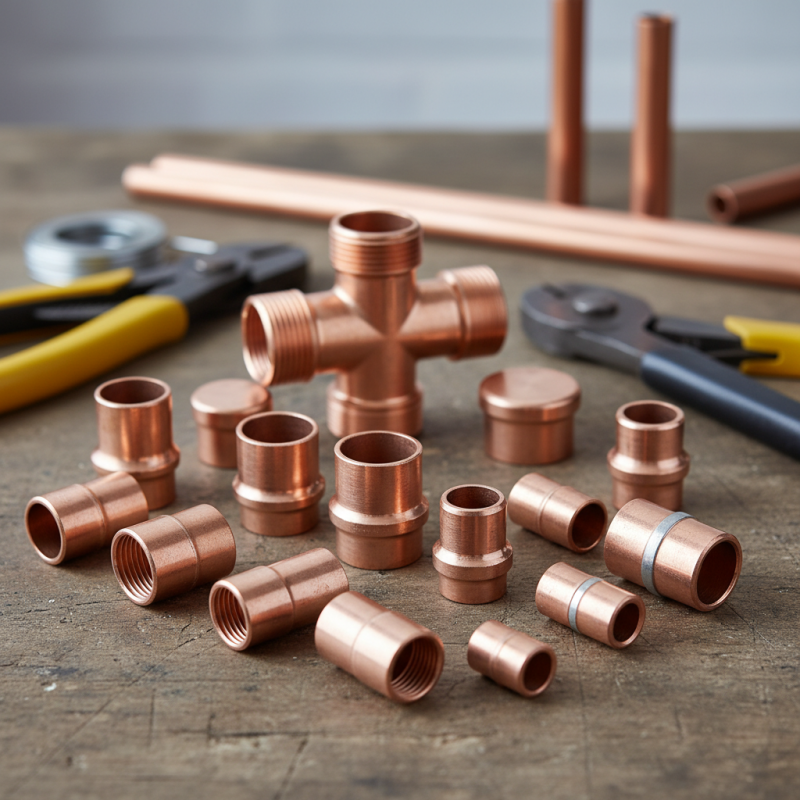
Essential Types of Copper Fittings for HVAC Systems
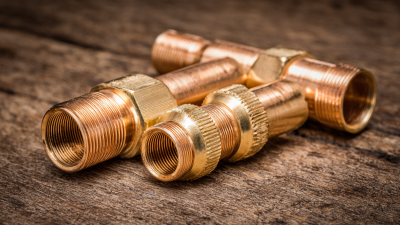
In HVAC systems, copper fittings play a crucial role in ensuring efficient operation. These fittings connect various components, allowing for smooth refrigerant flow. Common types include elbows, tees, and reducers. Each type serves a specific purpose, making it essential to choose the right fitting for your project.
Elbows change the direction of flow. They come in different angles, typically 45 or 90 degrees. Tees are necessary when branching out to additional lines. They help maintain pressure and flow without any leaks. Reducers help transition between different pipe sizes. This ensures a tight fit and prevents refrigerant loss.
Selecting the right copper fittings involves understanding your HVAC system's requirements. Improper choices can lead to system inefficiencies. Some professionals may overlook the importance of quality in fittings. Lower-quality materials can compromise the entire system. Regular inspections and evaluations can mitigate these risks. Investing time in understanding the fittings can save you from future headaches.
Top 10 Hvac Copper Fittings You Need for Your Projects
| Fitting Type |
Usage |
Size (inches) |
Material |
Connection Type |
| Elbow |
Change direction |
1/2, 3/4, 1 |
Copper |
Sweat |
| Coupling |
Join two pipes |
1/2, 3/4, 1 |
Copper |
Sweat |
| Tee |
Branch off |
1/2, 3/4, 1 |
Copper |
Sweat |
| Cap |
Seal end of pipe |
1/2, 3/4, 1 |
Copper |
Sweat |
| Reducer |
Convert sizes |
1 to 3/4, 1 to 1/2 |
Copper |
Sweat |
| Cross |
Join four pipes |
1/2, 3/4 |
Copper |
Sweat |
| Union |
Connect/disconnect easily |
1/2, 3/4 |
Copper |
Threaded |
| Swage |
Expand pipe |
Varied |
Copper |
Sweat |
| Solder |
Join two copper pieces |
N/A |
Bronze |
N/A |
| Flare |
Connect flare fittings |
1/2, 3/4 |
Copper |
Flare |
Key Features to Consider When Choosing Copper Fittings
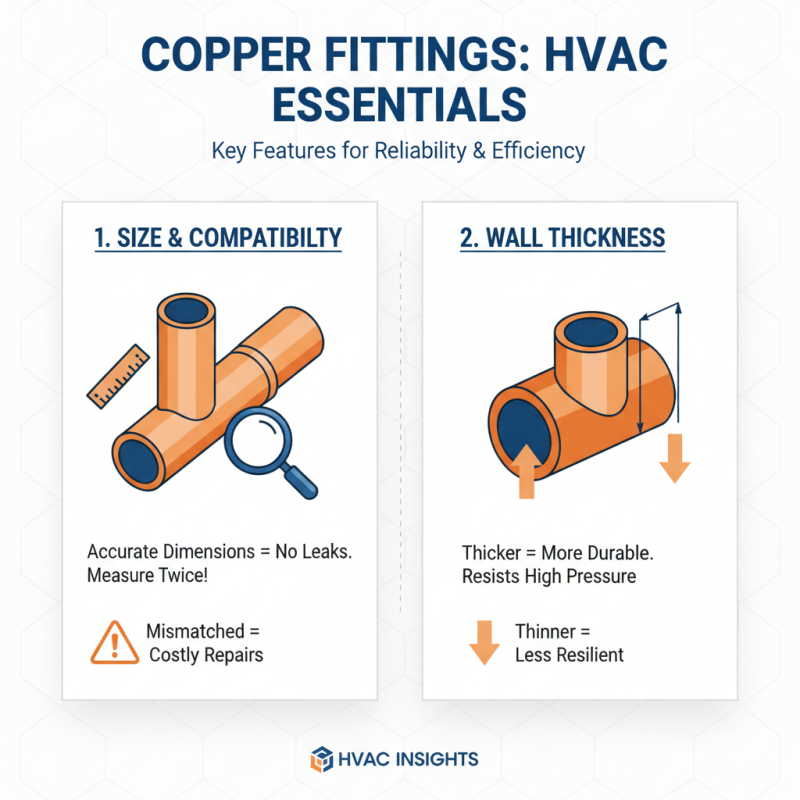
When selecting copper fittings for HVAC projects, it's essential to focus on key features that ensure reliability and efficiency. First, consider the size and compatibility of the fittings. Accurate dimensions will prevent leaks and ensure a tight fit in your installations. Measure twice, as a fitting that doesn’t match can lead to costly repairs. Additionally, inspect the wall thickness. Thicker fittings usually offer more durability, resisting the wear and tear of high-pressure systems.
Next, the type of joint plays a crucial role. Solder joints are commonly used but can require considerable skill. Look for options that suit your experience level. Don’t overlook the finish of the fittings. A good finish prevents corrosion, which can compromise performance over time. It’s worthwhile to balance quality with cost, as cheaper options may lead to problems down the road.
Finally, consider the environment where the fittings will be installed. Extreme temperatures might affect performance. Ensure the fittings you choose can withstand the specific demands of the project. Reflect on your previous experiences with copper fittings. Learning from past projects can guide you in making informed choices. Each project adds to your knowledge. Trust that with careful consideration, you can achieve reliable results in HVAC installations.
Top 10 HVAC Copper Fittings with Their Applications
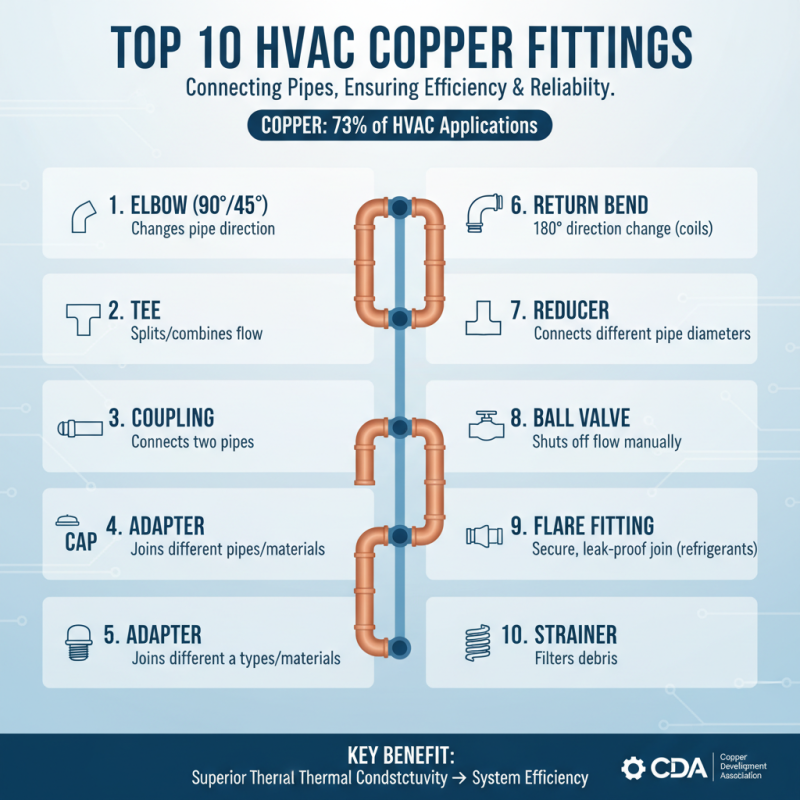
When working on HVAC projects, choosing the right copper fittings is crucial. These fittings serve various purposes, from connecting pipes to enabling efficient heat transfer. According to the Copper Development Association, copper accounts for 73% of HVAC applications due to its superior thermal conductivity. This feature directly influences system efficiency and overall reliability.
Common HVAC copper fittings include elbows, tees, and couplings. Elbows change the direction of the piping, which is essential in tight spaces. Tees help branch off the flow, allowing for effective circulation. Couplings connect two pipes together, ensuring a seamless transition. A study by the American Society of Heating, Refrigerating and Air-Conditioning Engineers (ASHRAE) highlights that proper fitting selection can reduce energy consumption by up to 15%. However, poor choices can result in leaks and increased maintenance costs.
Proper installation of these fittings is also important. Many technicians underestimate the significance of torque specifications, which can lead to joint failures. Industry data suggests that about 20% of premature system failures are related to improper fitting installation. This emphasizes the need for trained professionals to perform installations carefully. Each fitting has unique properties and intended uses that installers should respect, as overlooking these details may undermine project success.
Guidelines for Proper Installation of Copper Fittings
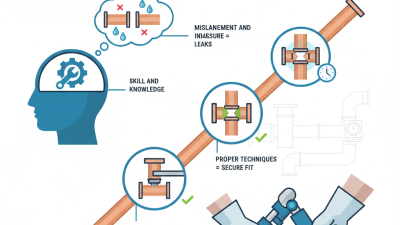
When installing copper fittings, the right techniques matter. Proper installation not only ensures system efficiency but also prolongs the lifespan of HVAC systems. An industry study shows that improper connections account for nearly 30% of system failures. Thus, attention to detail is crucial.
Start by cleaning both the fitting and the copper pipe. Contaminants can lead to leaks, which weaken the overall system. A clean surface maximizes the effectiveness of solder joints. Remember to use the correct flux and solder type. According to the Copper Development Association, using the wrong materials can lead to faster corrosion and lower performance.
Heating the joints should be even and controlled. Overheating can damage the fitting or pipe. In fact, a report from the American National Standards Institute states that overheating can reduce copper's structural integrity. Therefore, practicing cautious heating techniques is essential. Lastly, always let joints cool naturally. Rushing this process can create weak connections, which may fail under pressure.
Maintenance Tips to Ensure Longevity of Copper Fittings
Copper fittings are essential in HVAC systems. Proper maintenance is crucial for their longevity. Reports indicate that up to 90% of HVAC failures stem from improper installation or lack of care. Regular inspection can prevent these issues.
One effective maintenance tip is to clean the fittings frequently. Dirt and debris can lead to corrosion. A study shows that corroded copper fittings reduce system efficiency by 20%. Use a soft cloth for cleaning. Avoid abrasive materials that can damage the surface.
Additionally, monitor the system’s pressure levels. Fluctuations can stress the fittings. Ensuring that the pressure stays within the recommended range can extend their lifespan. Consider using a pressure gauge to track this effectively. Regular checks will help catch potential problems early, reducing costs in the long run.
Remember, neglecting these components can lead to larger system failures. Proper upkeep is not just beneficial; it's essential for optimal performance. Regular maintenance reflects attention to detail and prolongs the life of your HVAC system.



 Email
Email Whatsapp
 WeChat