How to Choose the Right Copper Capillary Tube for Your Needs?
Choosing the right Copper Capillary Tube is crucial for various applications. Industry reports indicate that the demand for copper tubes is growing at a rate of 5% annually. This increase is driven by their exceptional thermal conductivity and resistance to corrosion.
Selecting the proper Copper Capillary Tube requires careful consideration of several factors. For instance, the inner diameter and wall thickness can significantly impact performance. Many engineers express confusion over these specifications. Additionally, the application context, such as refrigeration or HVAC systems, also influences choice.
The market offers a variety of options, but not all tubes meet the required standards. Data shows that approximately 30% of products fail to perform effectively in real-world conditions. This underlines the importance of choosing wisely. By understanding your specific needs, you can avoid potential pitfalls.
Understanding the Basics of Copper Capillary Tubes
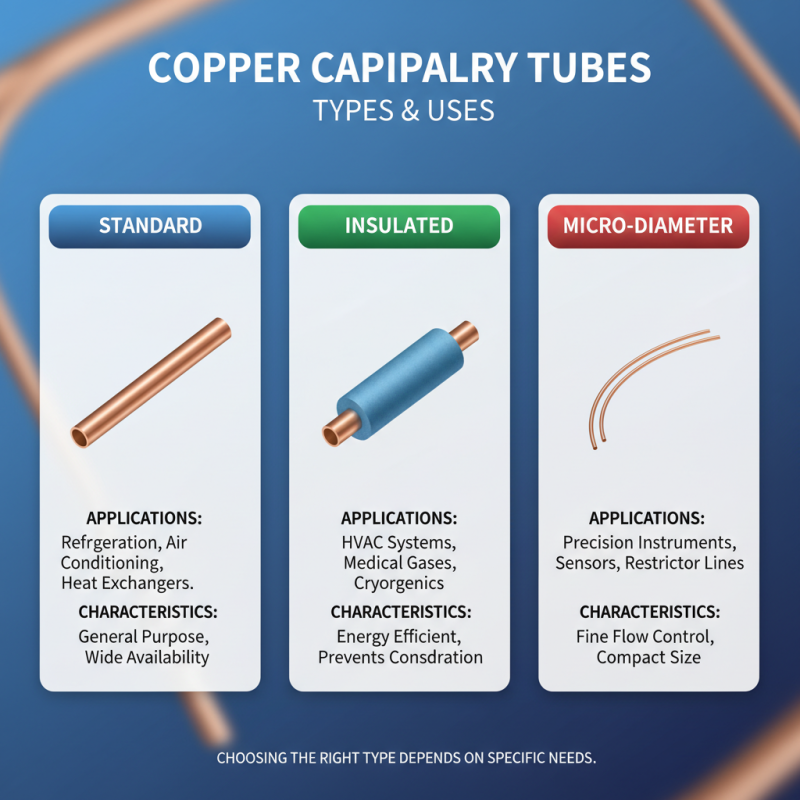
Copper capillary tubes are essential in various applications, including refrigeration and HVAC systems. These tubes are characterized by their small diameter and excellent thermal conductivity. Understanding their basics can aid in selecting the right one for your needs.
When choosing a copper capillary tube, consider the length and diameter needed for your specific application. Shorter tubes may work better in small systems. Larger diameter tubes can carry more refrigerant but may not fit tightly in compact setups. If you have uncertainties, experimenting with a few options can provide insight into what works best.
Tips: Always measure accurately. A mismatch in size can lead to inefficiencies. Try to visualize the entire system layout before making a decision. Remember, the right tube choice enhances performance but may require testing for optimal results. Investing time in this process can make a significant difference. Adjustments may be necessary as conditions change or systems evolve.
How to Choose the Right Copper Capillary Tube for Your Needs?
This chart illustrates key specifications for choosing the right copper capillary tube. The data includes tube diameter, length, wall thickness, and bending radius, which are critical factors to consider based on your specific needs.
Key Factors to Consider When Selecting Copper Capillary Tubes
Choosing the right copper capillary tube involves several key factors. Size is crucial. The diameter and length of the tube affect the flow rate. Too narrow a tube can restrict flow, while one too wide may not fit your system. Measure carefully before selecting.
Next, consider the application. Different applications require specific properties. For example, refrigeration systems often need tubes that can withstand temperature variations. The thickness of the tube wall can impact durability. Don't overlook the working environment; exposure to elements can lead to corrosion.
Lastly, think about the fabrication process. Some tubes undergo bending or coiling. This can influence the installation. If the tube isn't shaped right, it could hinder performance. Reflect on your needs and seek expert advice if necessary. Each decision can have lasting effects.
How to Choose the Right Copper Capillary Tube for Your Needs?
| Dimension (mm) |
Length (m) |
Wall Thickness (mm) |
Operating Temperature (°C) |
Application |
| 4 x 0.5 |
2 |
0.5 |
-40 to 100 |
Refrigeration |
| 6 x 0.75 |
3 |
0.75 |
-20 to 150 |
Air Conditioning |
| 8 x 1.0 |
5 |
1.0 |
-10 to 200 |
Hydronic Systems |
| 10 x 1.5 |
4 |
1.5 |
0 to 250 |
Heat Transfer |
Guidelines for Measuring and Sizing Copper Capillary Tubes
Choosing the right copper capillary tube requires careful measurement and sizing. Start by determining the intended application.
The diameter plays a crucial role in fluid flow.
A thicker tube can handle more flow, while a thinner tube allows for precise control. Measure the required length of the tube accurately.
When measuring, keep in mind that small errors can lead to significant issues. It’s essential to think ahead about the environment where the tube will be used.
Factors like temperature and pressure will affect performance. Consider how these variables might change over time.
Tip: Always double-check your measurements before finalizing your choice. A wrong size could lead to leaks or inefficiencies, impacting your project.
Astronomical precision isn't always necessary. Sometimes, a slight overestimation might give you room for adjustments.
Estimate the diameter with care, paying attention to fluctuations during operation.
Tip: Consult with professionals if in doubt. Their experience can help refine your selection.
Avoid rush decisions. Taking time to evaluate your needs will yield better results in the long run.
Common Applications of Copper Capillary Tubes in Various Industries
Copper capillary tubes play a vital role in various industries. In HVAC systems, they help transfer refrigerants efficiently. The thin diameter of these tubes enhances the flow and pressure control. This is essential for optimizing cooling in air conditioning units. However, improper sizing can lead to inefficiency or even system failure.
In the medical field, copper capillary tubes are used for fluid sampling. Their small size allows for precise measurements, which is crucial for accurate diagnostics. Yet, handling these tubes requires care, as they can be easily damaged. Mistakes in the application can result in contamination or loss of samples.
Additionally, in the automotive industry, these tubes cool engine components. They ensure that critical parts maintain optimal temperature for performance. It's important to choose the right wall thickness to avoid overheating issues. But this choice can be overlooked, leading to potential malfunctions. Awareness of these factors is key for effective use.



 Email
Email Whatsapp
 WeChat