How to Choose the Right Condenser Fan for Your Needs?
Choosing the right condenser fan can significantly impact the efficiency of your cooling system. Dr. Emily Reynolds, an HVAC expert, notes, "Selecting the correct condenser fan is vital for optimal performance." This underscores the importance of understanding your specific needs.
Condenser fans come in various sizes and types, influencing their effectiveness and energy consumption. It’s essential to consider factors like airflow requirements and noise levels. For instance, residential applications may prioritize quieter operations, while industrial settings could focus on robust airflow.
Finding the right balance can feel overwhelming. Many people mistakenly choose based on brand reputation alone. This often leads to dissatisfaction or inefficiencies. Engaging with experts and researching can provide clarity. Ultimately, the goal is to enhance performance while maintaining reliability in your system.
Understanding the Functionality of Condenser Fans in HVAC Systems
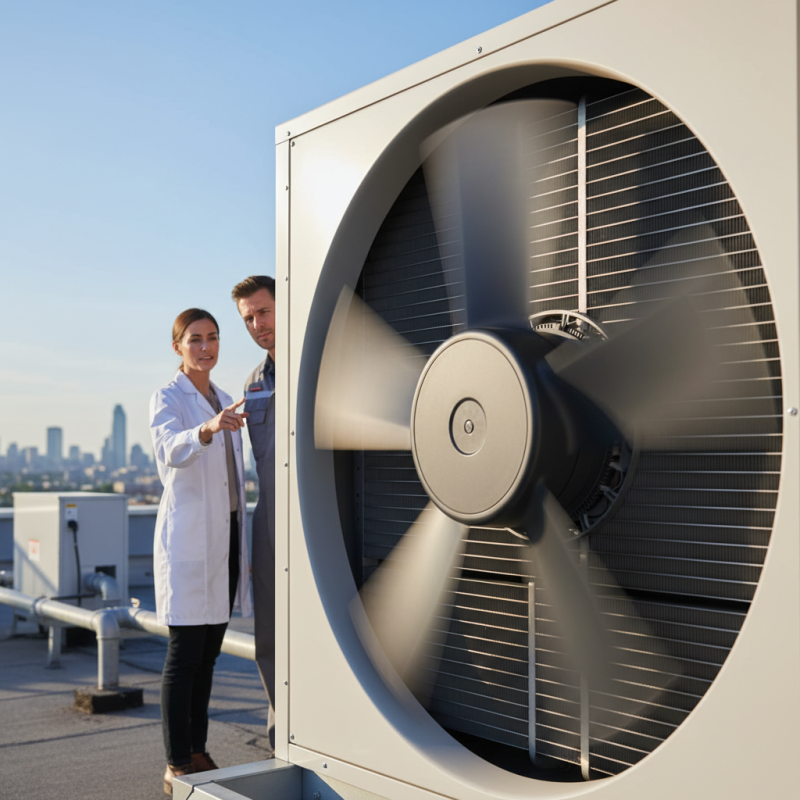
Condenser fans play a crucial role in HVAC systems. They help expel heat, enabling air conditioners and refrigeration units to operate efficiently. According to the Department of Energy, nearly 30% of energy consumption in buildings comes from HVAC systems, highlighting the importance of efficient fan operation.
When selecting a condenser fan, understanding airflow and static pressure is vital. A fan that doesn’t match the system’s requirements can lead to inefficiencies. Reports indicate that improperly sized fans can reduce system performance by up to 15%. It’s essential to consider these factors when making a decision.
Moreover, noise levels are often overlooked. Fans with higher RPMs may enhance cooling but can also create discomfort. A balance between performance and acoustics is necessary. Data from the American Society of Heating, Refrigerating and Air-Conditioning Engineers indicates that optimal noise levels should not exceed 50 dB for residential spaces. Finding the right condenser fan involves weighing performance metrics against comfort and efficiency needs.
Identifying Your Specific Cooling Requirements for Selection
Choosing a condenser fan involves understanding your specific cooling needs. Different environments require varying levels of cooling efficiency. Consider factors like the size of your space and the type of equipment you’re cooling. Larger areas may need powerful fans, while smaller spaces might not. Think about airflow direction and the required cooling capacity.
Temperature fluctuations can impact fan performance. It’s essential to assess the average temperature in your space. High temperatures necessitate more robust cooling solutions. Look at the ambient conditions and any additional heat sources present. This understanding helps in matching fans to your cooling requirements effectively.
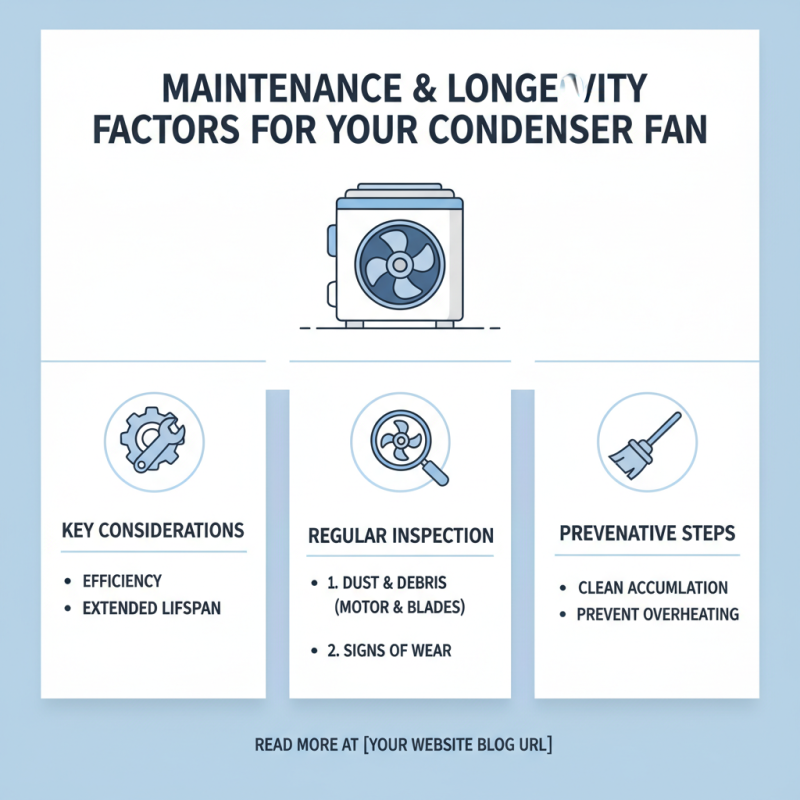
Installation and maintenance also play a crucial role. Improper installation can lead to ineffective cooling and increased energy costs. Regular maintenance is vital to ensure longevity and optimal performance. A poorly maintained fan may not meet your cooling demands, resulting in discomfort or inefficient operation. Always reflect on how different models and settings could better suit your circumstances.
Condenser Fan Selection Based on Cooling Requirements
Evaluating Different Types and Sizes of Condenser Fans
When selecting a condenser fan, understanding the different types and sizes is crucial. Condenser fans come in several designs, including axial and centrifugal. Axial fans are popular for their efficiency and compact size. They work well in smaller spaces. However, they may not provide enough airflow for larger units. Centrifugal fans, on the other hand, excel in moving air over longer distances. They are bulkier but can handle a higher load. Knowing the characteristics of each helps streamline your decision.
Size is another important factor. A fan that’s too small will struggle to cool effectively. Conversely, an oversized fan can lead to increased energy costs. Measure your condenser unit carefully. Consider its capacity and the area it serves. You may also want to assess the environment. Dusty or humid conditions might affect fan performance. Keeping these elements in mind can lead to better efficiency.
It's essential to think about noise levels as well. Some fans can be quite loud, which can be bothersome. A quieter model might be more suitable in residential areas. You might need to compromise between performance and noise. Researching user opinions can provide insight into real-world experiences. A thoughtful consideration of these factors ensures you choose the best fan for your situation.
Considering Energy Efficiency and Noise Levels in Your Choice
When selecting a condenser fan, energy efficiency should be a top priority. A fan with a higher efficiency rating consumes less power. This can lead to significant savings over time. Consider the energy consumption of different models. Look for fans that have been tested for their efficiency. Energy Star ratings are an excellent starting point for your research.
Noise levels are another essential factor. Some fans operate quietly, while others can be quite loud. A noisy fan can be disruptive, especially in residential settings. Check the decibel ratings of different models. A lower rating generally indicates a quieter operation. It’s essential to find a balance between performance and noise. If the noise is bothersome, you may need to reconsider your options.
Make sure to examine the airflow of the fan. Higher airflow is vital for cooling efficiency. However, powerful fans can generate more noise. Sometimes, the best choice is not the most powerful one. It’s crucial to reflect on how much noise you can tolerate. Ultimately, your individual needs should guide your decision. Consider your environment and how these factors align with your preferences.
How to Choose the Right Condenser Fan for Your Needs? - Considering Energy Efficiency and Noise Levels in Your Choice
| Fan Type |
Energy Efficiency (SEER Rating) |
Noise Level (dB) |
Recommended for |
| Axial Fan |
15+ |
50-60 |
Residential use, small spaces |
| Centrifugal Fan |
16+ |
60-70 |
Commercial use, larger areas |
| DC Fan |
20+ |
30-40 |
Energy-efficient homes, eco-friendly choices |
| High-Performance Fan |
18+ |
45-55 |
High-demand cooling systems |



 Email
Email Whatsapp
 WeChat