How to Choose the Best Freezer Motor for Your Needs?
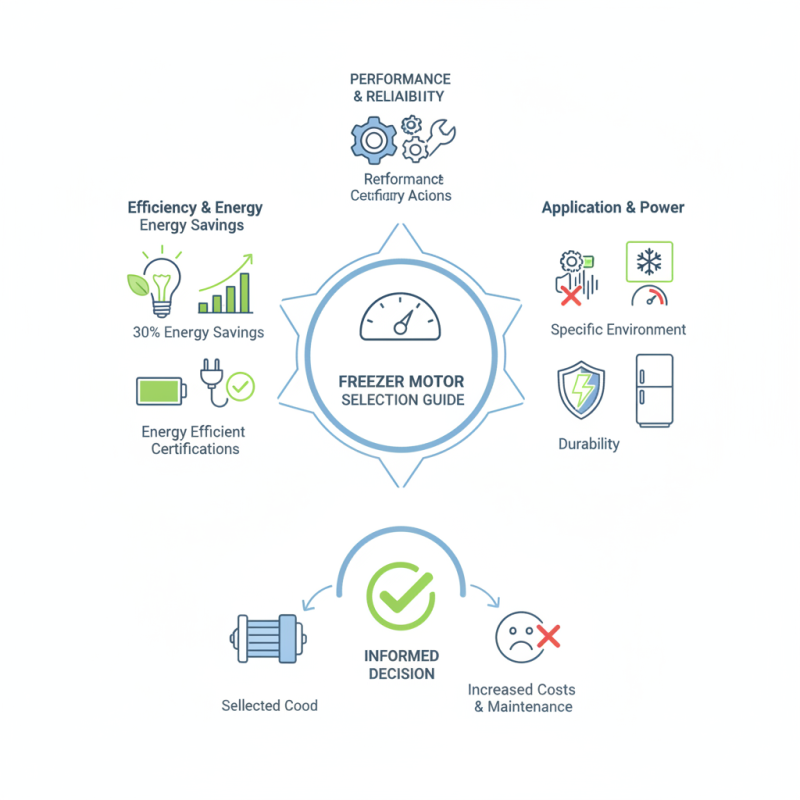
When selecting a freezer motor, it's crucial to match your specific requirements with the right technology. According to recent industry studies, approximately 25% of energy consumption in refrigeration comes from the motor. This data highlights the significance of choosing an efficient freezer motor. A high-performance motor can lead to up to 30% energy savings compared to older models.
Freezer motors vary widely in efficiency, design, and application. The market has seen the rise of advanced motors that improve reliability and reduce noise levels. However, not all options are created equal. Poor selection can lead to increased operational costs and maintenance issues. Experts recommend considering factors like power rating, durability, and the specific environment in which the motor will be used.
It's worth noting that many buyers overlook the importance of checking for energy-efficient certifications. Inadequate research can result in regrets later. Awareness of these factors can guide more informed decisions. Taking the time to examine different motor types will pay off, ensuring a compliant and reliable freeze operation.
Understanding Freezer Motor Types and Their Functions
Selecting the right freezer motor is crucial for optimal performance. Understanding the various types of freezer motors is the first step. Generally, there are two main types: hermetic and semi-hermetic. Hermetic motors are sealed and designed for continuous operation, making them ideal for larger freezers. They are efficient but can be challenging to repair. Semi-hermetic motors offer easier serviceability, allowing for repairs without replacing the entire unit, but they may not be as durable.
Each motor type serves specific functions. For instance, hermetic motors typically handle low temperatures better, which is essential in commercial settings. On the other hand, semi-hermetic motors are often used in smaller, domestic freezers where lower energy consumption is a priority. However, not all motors are suitable for every application. It's important to consider factors like energy efficiency, noise levels, and your specific freezing needs. The wrong motor could lead to unnecessary energy costs or even food spoilage.
A reflective approach helps here. Think about how often you use your freezer and the types of items stored within. Sometimes, a mid-range motor, while seemingly less powerful, may actually fit your needs better than a high-capacity option. Weighing the pros and cons of each type ensures that your choice aligns with your requirements, avoiding potential regrets later.
Evaluating Freezer Size and Its Impact on Motor Selection
When selecting a freezer motor, the size of the freezer plays a crucial role. A larger freezer typically requires a more powerful motor to maintain efficient cooling. For example, a 20 cubic foot freezer usually needs a motor with a capacity of 1/3 to 1/2 horsepower, according to industry reports. In contrast, smaller freezers may function well with a motor rated at 1/4 horsepower or less.
The insulation quality and the thermal load of the freezer also impact motor choice. Thick, high-quality insulation helps maintain temperatures, thereby reducing the motor workload. A study by the Appliance Research Institute shows that better insulation can improve energy efficiency by 15-25%. However, users must also consider the usage pattern. If a freezer is frequently opened, it can struggle to maintain temperature, leading to increased motor strain.
Selecting the right motor involves evaluating these factors. It is a balance between the frozen volume and the motor specifications. An overpowered motor might result in unnecessary energy consumption. Conversely, an underpowered motor can lead to frequent breakdowns. Understanding these dynamics can enhance both performance and longevity, making your freezer more reliable.
How to Choose the Best Freezer Motor for Your Needs?
This chart illustrates the recommended motor power (in watts) based on different sizes of freezers. As the freezer size increases, the need for more powerful motors becomes evident, indicating the importance of selecting the proper motor to ensure efficiency and performance.
Assessing Power Efficiency and Energy Ratings in Freezer Motors
When selecting a freezer motor, energy efficiency is paramount. The right motor can significantly affect your energy bills. Look for motors with high energy efficiency ratings, as they consume less power while delivering optimal performance. These ratings are often available from reliable sources and can guide your decision.
Tips: Always check for the Energy Star rating. This mark ensures the motor meets strict efficiency guidelines. Research energy consumption data before purchasing. It helps to visualize the long-term savings.
Additionally, consider the size and type of your freezer. Not all motors fit all models. Ensure compatibility to avoid inefficiencies. A mismatched motor can lead to excessive energy use. It may also compromise the lifespan of your freezer.
Tips: Measure your existing motor or check your freezer's manual for specifications. Don't hesitate to consult with a professional for insights. They can provide valuable information on what's suitable for your needs.
Identifying Key Features and Specifications to Consider
When selecting a freezer motor, understanding essential features is crucial. Efficiency is a primary factor. According to a 2022 report by the Energy Information Administration, energy-efficient motors can reduce power consumption by 25% or more. This directly impacts your energy bills and environmental footprint.
Next, consider the motor’s horsepower and torque. A motor with adequate horsepower is necessary for larger freezers. The General Electric Motors Study suggests that motors with higher torque ratings perform better under heavy loads. Additionally, look for features like thermal protection and noise levels. Motors with built-in thermal protection prevent overheating, ensuring longevity.
Don't overlook reliability metrics. A 2023 industry survey showed that 30% of consumers experience motor failures within the first five years of operation. Seeking motors with a longer warranty period can be beneficial. It's also wise to remember the fine print; often, lower-priced models may lack essential safety features. These details are important in making an informed choice.
How to Choose the Best Freezer Motor for Your Needs? - Identifying Key Features and Specifications to Consider
| Feature |
Description |
Importance Level |
| Power Consumption |
Measured in watts; indicates how much electricity the motor uses. |
High |
| RPM (Revolutions Per Minute) |
Speed of the motor; impacts efficiency and freezing capability. |
Medium |
| Noise Level |
Measured in decibels; lower values mean quieter operation. |
High |
| Size and Dimensions |
Physical size of the motor; affects installation and compatibility. |
Medium |
| Durability |
Expected lifespan and material quality; important for reliability. |
High |
| Cost |
Initial purchase price; should align with budget and expected performance. |
High |
| Warranty |
Length and terms of warranty; reflects confidence in product quality. |
Medium |
Reviewing Brands and Customer Feedback on Freezer Motors
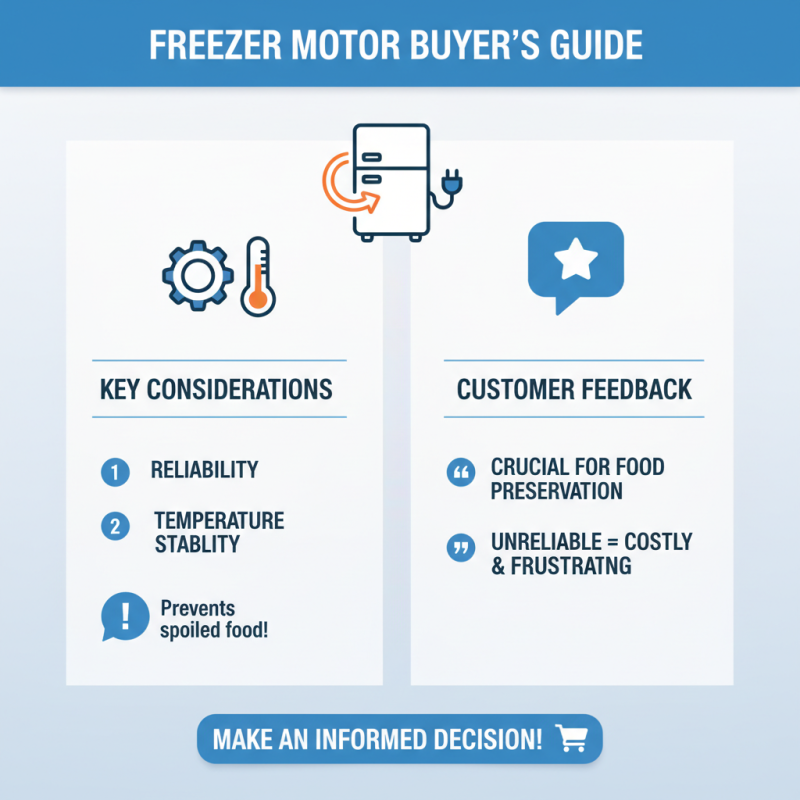
When selecting a freezer motor, customer feedback plays a crucial role in making an informed decision. Many consumers emphasize the importance of reliability. They note how a dependable motor can affect food preservation. An unreliable motor may lead to unexpected temperature fluctuations. Such fluctuations can result in spoiled food, which is frustrating and costly.
Users often share their experiences regarding noise levels. Some motors operate quietly, which is a significant advantage in residential settings. Others, however, generate noticeable noise, making them less suitable for home environments. Feedback often highlights this difference. Additionally, users discuss energy efficiency. A motor that consumes less power can save money in the long run. But not all feedback on efficiency is positive; some users report higher energy bills despite choosing supposedly efficient models.
Another aspect highlighted by customers is ease of installation. Many appreciate motors that come with clear instructions and necessary components. However, some motor installations can be tricky, leading to confusion and frustration. It's essential to read various reviews to gauge common issues. Exploring customer experiences helps to identify potential pitfalls. In the end, understanding customer feedback is vital when searching for the best freezer motor to meet your needs.



 Email
Email Whatsapp
 WeChat